Earth, Moon & Sun: Moon Phases — Print · Grade 9 Science
Chapter: Earth, Moon & Solar SystemEarth, Moon & Sun: Moon Phases
Learning goals
- I can explain that moon phases are caused by our changing view of the Moon's sunlit half, not by Earth's shadow.
- I can put the eight phases of the Moon in order, from new moon to full moon and back.
- I can explain why lunar and solar eclipses are rare compared to the regular monthly phases.
Readings for this unit
Before this unit
Use a Sun–Earth–Moon diagram and distinguish illumination from shadow.
Plan three teaching sessions: core explanation and Parts 1–2; Parts 3–4 with diagrams and reasoning checks; then the whole-unit application, worked examples, independent practice, and exit check. Read one part at a time, explain it without notes, and revisit any gap. Allow about 40–50 minutes per session; adjust after checking understanding. Trace and explain the labeled figures in each part. In the third session, complete the illustrated case and changed independent application; retain a corrected explanation rather than only an answer.
Start with something to explain
Why does the Moon change appearance without changing its size?
Illustrative evidence case. Ordinary Sun illumination lights about half the Moon, while Earth sees different fractions as relative geometry changes. Eclipses happen less often than new/full phases.
Notice and wonder
Record two observations using the stated quantities or relationships. Keep observations separate from possible causes. Write one question that a new measurement could help answer.
Why does the Moon change appearance without changing its size?
Your first model
Draw Sun-facing illumination, Earth’s viewpoint and a separate tilted-orbit side view.
Build the language from the idea
- phase
- One of the recurring shapes the Moon appears to have from Earth, caused by how much of its sunlit half we can see.
- waxing
- Describes a Moon that is growing more lit each night, moving toward full moon.
- waning
- Describes a Moon that is shrinking, getting less lit each night, moving toward new moon.
- new moon
- The phase when the Moon's unlit side faces Earth, making it nearly invisible in the sky; the start (and end) of the monthly cycle.
- synodic month
- Average new-to-new lunar phase cycle of about 29.5 days; distinct from the approximately 27.3-day orbit relative to distant stars.
Let's clear up the single most common misunderstanding about the Moon right away: its phases are not caused by Earth's shadow falling across it. The Sun is always lighting up exactly half of the Moon — the half facing the Sun — just as it always lights exactly half of Earth (the half where it's daytime). The Moon isn't changing how much of it is lit; what changes is how much of that lit half we can see from down here, because the Moon is constantly circling us. A phase is simply the name for how much of the sunlit half is turned toward us on a given night.
Picture the geometry. When the Moon sits roughly between Earth and the Sun, its lit half faces away from us and we see almost nothing — a new moon. When the Moon is on the far side of Earth from the Sun, its entire lit half faces us and we see a full moon. In between, we catch that lit half at an angle, so we see only a slice of it. That's why the Moon seems to change shape night after night — we're really just viewing the same half-lit ball from a slightly different angle as it travels around us.
Over about 29.5 days — one new-to-new illumination cycle, called a synodic month; the Moon’s orbit relative to distant stars takes about 27.3 days — the Moon runs through eight phases in the same order every single time: new moon → waxing crescent → first quarter (exactly half-lit) → waxing gibbous → full moon → waning gibbous → third quarter (half-lit again) → waning crescent → and back to new. The vocabulary just describes what your eyes see: waxing means the lit portion is growing night to night, waning means it's shrinking, gibbous means more than half is lit, and crescent means less than half. So a 'waxing crescent' is a thin sliver that's getting fatter, and a 'waning gibbous' is a mostly-full Moon that's slimming down.
Eclipses are a completely different, and much rarer, event — and this is where Earth's shadow finally does matter. A lunar eclipse can only happen at full moon, when Earth passes directly between the Sun and Moon and casts its shadow onto the Moon, sometimes tinting it a dim, coppery red. A solar eclipse can only happen at new moon, when the Moon slips directly between us and the Sun and briefly blocks it out. So eclipses are special alignments, not the ordinary monthly phases.
If that's true, why don't we get a pair of eclipses every single month, at every full and new moon? The answer is a small tilt. The Moon's orbit is tipped about 5° relative to Earth's own path around the Sun, so most months the Moon passes a little above or a little below the perfect Sun-Earth-Moon line, and its shadow (or Earth's) misses. Only a few times a year do the three bodies line up exactly enough for an eclipse — which is precisely why a total eclipse feels like such a rare treat, while the phases roll around dependably every single month.
The Sun illuminates about half the Moon at a time, and phases show how much of that illuminated half is visible from Earth. The ordinary monthly phase sequence does not result from Earth's shadow; an eclipse is a special alignment.
The Moon's orbit is tilted relative to Earth's orbital plane, so eclipses do not occur at every new or full moon. A flat classroom diagram hides that tilt. State whether the diagram is a view from space or from Earth's surface.
Predict a phase using relative positions, then describe the observer's view. The Moon's rotation and revolution periods are approximately matched, so broadly the same side faces Earth. That near side still experiences day and night and is not always illuminated.
Build your understanding
Plan three teaching sessions: core explanation and Parts 1–2; Parts 3–4 with diagrams and reasoning checks; then the whole-unit application, worked examples, independent practice, and exit check. Read one part at a time, explain it without notes, and revisit any gap. Allow about 40–50 minutes per session; adjust after checking understanding.
Part 1 · Separate illumination from the view from Earth
Sunlight illuminates approximately half of the Moon at any ordinary phase. The fraction of that lit hemisphere visible from Earth depends on relative geometry. Near new Moon, the Moon is toward the Sun’s direction and its lit side faces mostly away from us. Near full Moon it is roughly opposite the Sun and we see nearly the whole lit hemisphere. The Moon’s own shadowed side is different from Earth casting a shadow onto it. Earth’s shadow creates a lunar eclipse only under special alignment; it is not responsible for the regular phase sequence.
Read the visual model
All four Moon positions retain a Sun-facing illuminated half. Compare the direction from each Moon toward the Earth observer; these little disks are space-view hemispheres, not the identical apparent views from Earth.
Why is a crescent not evidence that Earth’s shadow covers most of the Moon?
Visual reasoning — after your attempt
Ordinary phase geometry lets Earth see only part of the Moon’s Sun-lit hemisphere. Earth’s shadow is a separate eclipse phenomenon under special alignment.
Sunlight illuminates approximately half the Moon at a time. A phase describes how much of that illuminated hemisphere is visible from Earth. Earth, Moon and Sun geometry changes as the Moon orbits. Earth’s shadow produces a lunar eclipse under suitable alignment; it does not create the ordinary monthly phase sequence.
Draw the illuminated half facing the Sun first, then mark the Earth-based line of sight. This prevents shading the Moon according to what an observer sees rather than its actual illumination.
Pause and explain
Why is a crescent not evidence that most of the Moon is in Earth’s shadow?
Check your reasoning after answering
Ordinary phases result from viewing geometry; roughly half remains sunlit apart from eclipse conditions.
Part 2 · Track waxing and waning through a cycle
Waxing means the visible illuminated fraction is increasing; waning means it is decreasing. First and third quarter refer to roughly one quarter and three quarters through the phase cycle, even though the visible disk is about half lit at either stage. The average new-to-new cycle is about 29.5 days; orbital speed and actual appearance vary. Left/right orientation of the bright part also depends on observer viewpoint, so use relative fraction and consistent geometry rather than assuming one picture orientation is universal. The Moon is not growing or physically shrinking.
Read the visual model
Locate the rising and falling portions of the ideal fraction curve. Both quarter points reach one half, but the direction of change differs.
How can first and third quarter have the same illuminated fraction but different phase names?
Visual reasoning — after your attempt
Both appear about half lit; first quarter is on the waxing half of the cycle and third quarter on the waning half. The names describe cycle position rather than one-quarter illumination.
Waxing means the visible illuminated fraction is increasing; waning means it is decreasing. Quarter names refer to the stage of the cycle while the visible disk is approximately half lit. Use a consistent orbit diagram and observer location to relate phase, position and changing view.
A first-quarter Moon is not one quarter of a visible disk lit. The phase occurs about one quarter through the cycle; one half of the disk is illuminated as seen from Earth.
Pause and explain
Why do first and third quarter often look half illuminated?
Check your reasoning after answering
Quarter describes orbital-cycle stage, while the visible illuminated area is about half the disk.
Part 3 · Relate phase to sky position and timing
Near full phase, the Moon is roughly opposite the Sun in the sky. As Earth rotates, a location turning away from the setting Sun can see the full Moon toward the opposite horizon. That supports the approximate relation full Moon rises near sunset and sets near sunrise. Near new phase it is closer to the Sun’s sky direction, making ordinary observation harder against daylight and glare. Inclination, latitude and date alter exact timing. These are geometric patterns, not a precise local rise/set table, and safe observations never require looking directly at the Sun.
Read the visual model
Read the arrangement as an ideal full-phase sky-direction relation. Distances are exaggerated and the Moon’s illuminated side faces back toward the Sun.
Why is a full Moon commonly visible at night even though sunlight supplies its illumination?
Visual reasoning — after your attempt
It lies approximately opposite the Sun from Earth, so its illuminated face can be above the night-side observer’s horizon while the Sun is below it. Exact times depend on the stated conditions.
Relative position to the Sun helps determine when the Moon is visible. Near full Moon it is roughly opposite the Sun in the sky; near new Moon it is near the Sun’s direction. Approximate rise/set relationships are models affected by location, orbit inclination and date. Avoid exact timing without observation or a suitable ephemeris.
A near-full Moon is often visible during the night because Earth faces it on the night side. Explain the geometry instead of memorizing a clock time without conditions.
Pause and explain
Why is a full Moon generally visible at night?
Check your reasoning after answering
It lies roughly opposite the Sun as viewed from Earth, placing it above the night-side sky.
Part 4 · Explain why eclipses are less frequent than phases
The Moon’s orbital plane is tilted by about 5° relative to Earth’s orbital plane around the Sun. The two planes cross along a line with two nodes, or crossing directions. Near most new/full phases, the Moon is above or below the shadow alignment, so no solar or lunar eclipse occurs. An eclipse requires the appropriate phase plus alignment near a node. A top-view phase diagram can hide the vertical separation and mistakenly suggest monthly eclipses. Combine top and side views to explain both the regular phase cycle and the less frequent shadow events.
Read the visual model
Compare the tilted blue orbital section with the gold Sun–Earth reference line. The tilt is exaggerated for visibility.
Why is new Moon necessary but insufficient for a solar eclipse?
Visual reasoning — after your attempt
It puts the Moon toward the Sun from Earth, but the Moon must also lie near the shadow alignment/node rather than above or below it.
The Moon’s orbital plane is tilted relative to Earth’s orbital plane. Most new/full alignments pass above or below the needed shadow line. Eclipses require alignment near orbital crossing regions. An orbital-plane diagram is needed to explain frequency; a flat top view alone hides the tilt.
A new Moon is necessary for a solar eclipse but not sufficient. Add a side view showing the orbital tilt and ask whether the Moon crosses the line of sight at that time.
Pause and explain
Why is there not a solar eclipse at every new Moon?
Check your reasoning after answering
The tilted lunar orbit usually misses the precise Sun–Moon–Earth alignment needed.
Apply the whole unit · A phase-model critique
Illustrative student claim: the Moon is half lit at first quarter because Earth blocks half the sunlight; every following new Moon must eclipse the Sun.
Your task
Draw two labeled views correcting both claims, explain phase versus eclipse, and state which sizes and distances your model does not preserve.
What your response should show
- Use the supplied evidence accurately and label units or locations.
- Explain a physical mechanism or evidence-to-claim relationship.
- Show calculations or a clearly labeled model when the task calls for one.
- Identify a meaningful assumption, uncertainty, or competing explanation.
Response guidance — after your attempt
First quarter reflects the visible portion of the sunlit hemisphere, not ordinary shadowing by Earth. Orbital tilt prevents an eclipse at most new Moons. Label the Sunward illuminated half, observer and tilted orbital relation; the model is schematic.
Scientific references and adapted source material
Parent / teacher teaching notes
Use a safe lamp-and-ball demonstration without looking toward the Sun. Ask the learner to keep illumination and observed disk separate, and add a side view for eclipse reasoning. Ask the learner to explain each visual label and causal step before calculating. Preserve a first model, attempt the changed independent case, then use feedback to revise. Diagrams state whether values are illustrative or observed. Selected OpenSciEd excerpts are middle-school source material used for supported foundations; the independent high-school explanations and supplements are not the complete OpenSciEd teacher editions or an endorsement.
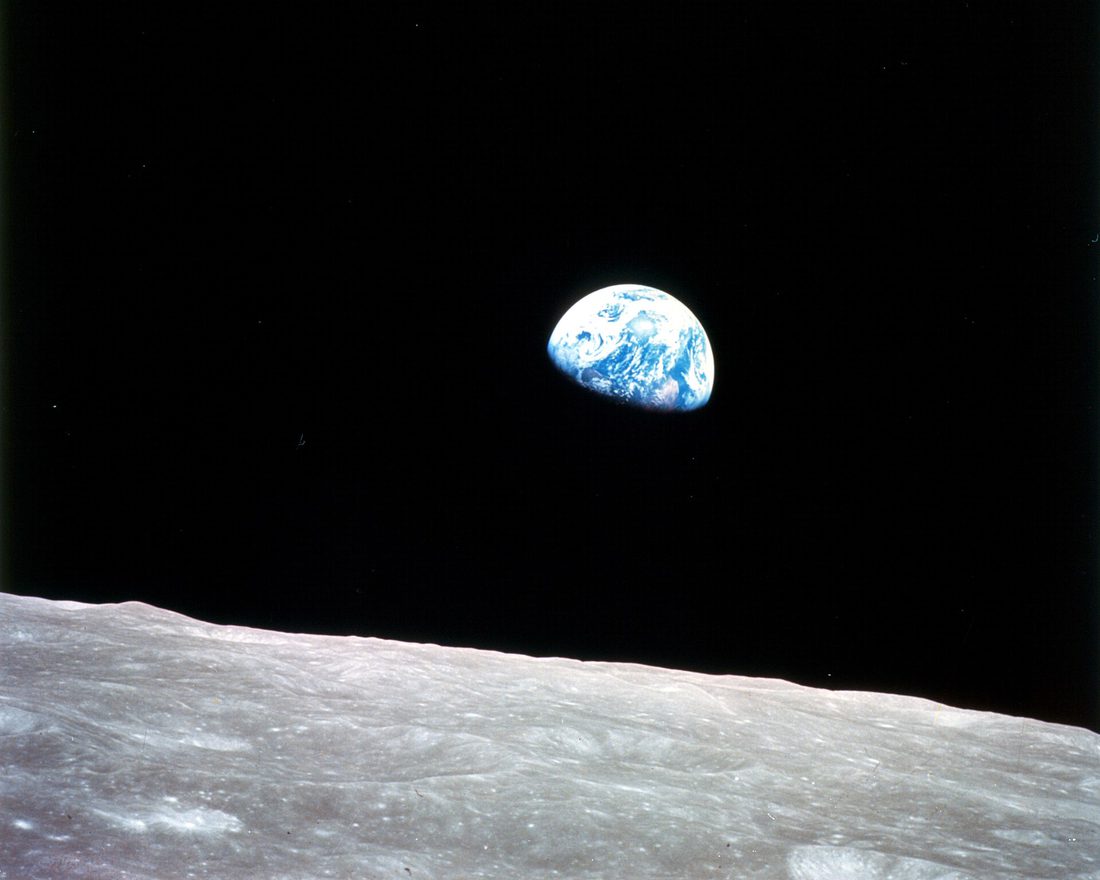
Animation of the Moon orbiting Earth, showing the eight phases (new, waxing crescent, first quarter, waxing gibbous, full, waning gibbous, third quarter, waning crescent) as the sunlit half comes into and out of view.
The key idea
Moon phases come from watching different portions of the Moon's always-half-lit surface as it orbits Earth — eclipses are the rarer case when Earth's shadow or the Moon itself actually blocks the light.
Moon Phase Timing
days since new moon ≈ (fraction of cycle) × 29.5
one full cycle of phases (a synodic month) takes about 29.5 days; e.g., first quarter is 1/4 of the way through (~7.4 days) and full moon is halfway (~14.75 days).
Worked examples
Example 1
- The full cycle from new moon back to new moon takes about 29.5 days.
- The four main phases (new, first quarter, full, third quarter) are evenly spaced around that cycle, so divide the cycle into 4 equal parts.
- 29.5 ÷ 4 ≈ 7.4 days.
Example 2 · Worked application
- The Sun usually illuminates approximately half the Moon's sphere.
- Earth's viewing angle exposes part of that lit half.
- First quarter describes the orbital phase, not illumination of only a quarter of the entire sphere.
Separate the visible disk from the whole sphere.
Example 3
- Full moon is the phase directly opposite new moon in the cycle — halfway around.
- Divide the full cycle in half: 29.5 ÷ 2 = 14.75.
- Round to a whole number of days.
Example 4
- A full moon places the bodies roughly along a line.
- The tilted lunar orbit usually places the Moon above or below Earth's shadow.
Example 5 · Find and fix the mistake
- Test the claim against the stated conditions: Separate the visible disk from the whole sphere.
- Phases result from viewing geometry. Earth's shadow causes a lunar eclipse only under special alignment.
Separate the visible disk from the whole sphere.
Example 6 · Reason from the visual evidence
- Read the arrangement as an ideal full-phase sky-direction relation. Distances are exaggerated and the Moon’s illuminated side faces back toward the Sun.
- It lies approximately opposite the Sun from Earth, so its illuminated face can be above the night-side observer’s horizon while the Sun is below it. Exact times depend on the stated conditions.
Original ideal alignment for interpreting full-phase viewing. It omits orbital tilt and real horizon/atmospheric effects and does not depict an eclipse. Labels state approximate timing, not an operational observation schedule or encouragement to view the Sun directly.
Avoid these mistakes
- The far side of the Moon is not a permanently dark side.
Check your understanding
At full moon, Earth lies roughly between Sun and Moon. Why is the Moon usually not eclipsed?
Discuss the answer
Orbital tilt usually prevents an exact shadow alignment.
What causes ordinary moon phases instead of eclipses?
Discuss the answer
Sunlight illuminates approximately half the Moon while Earth sees different fractions as geometry changes. Earth’s shadow produces a lunar eclipse only with appropriate alignment; it does not cause the regular phases.
Return to the phenomenon
Return to the initial case. Why does the Moon change appearance without changing its size? Revise your drawing or explanation using two named ideas and one stated limitation.
Compare explanations after your attempt
Monthly phases depend on Earth’s view of the lit hemisphere, not Earth’s shadow. Waxing/waning follow changing visible fraction; eclipses require additional node alignment in the tilted orbit.
What should we investigate next?
Which comparison would test a remaining uncertainty? State what you would change, keep comparable and measure.
Investigate, explain and revise
Complete the tasks after studying the visual parts. Keep the first model and explain a revision before consulting the guidance.
Activity 1 · Explain the opening case
Use this unit’s opening record, Parts 1–4 and your notebook model. No external equipment or text is required for this supplied-data route.
Your task
Return to the initial case. Why does the Moon change appearance without changing its size? Revise your drawing or explanation using two named ideas and one stated limitation.
Success criteria
- Use two stated observations or conditions.
- Connect the mechanism to a labeled diagram or calculation.
- Identify what your original model missed.
- State a useful further test and a limitation.
Hint
Name the quantities and interactions before assigning a cause.
Response guidance — discuss after your attempt
Monthly phases depend on Earth’s view of the lit hemisphere, not Earth’s shadow. Waxing/waning follow changing visible fraction; eclipses require additional node alignment in the tilted orbit.
Activity 2 · Transfer to a changed case
Use the figures, captions and vocabulary in this unit; cover the worked answer.
Your task
A student argues that first quarter must show one quarter of the lunar disk lit and every new Moon causes a solar eclipse. Correct both statements with geometry.
Success criteria
- Use the stated measurements or conditions, with correct units.
- Connect the result to the physical mechanism or evidence relationship.
- Identify the assumption, model limit or further evidence requested.
Hint
Separate measured values, calculated results and model assumptions.
Response guidance — discuss after your attempt
First quarter describes about one-quarter of the phase cycle and the visible disk is roughly half lit. New Moon alone does not guarantee a solar eclipse because the tilted lunar orbit usually misses the shadow line; alignment near a node is also needed.
Words to know
- phase
- One of the recurring shapes the Moon appears to have from Earth, caused by how much of its sunlit half we can see.
- waxing
- Describes a Moon that is growing more lit each night, moving toward full moon.
- waning
- Describes a Moon that is shrinking, getting less lit each night, moving toward new moon.
- new moon
- The phase when the Moon's unlit side faces Earth, making it nearly invisible in the sky; the start (and end) of the monthly cycle.
- synodic month
- Average new-to-new lunar phase cycle of about 29.5 days; distinct from the approximately 27.3-day orbit relative to distant stars.
Why we only ever see one face of the Moon
The Moon rotates on its axis in exactly the same amount of time it takes to orbit Earth once — a state called tidal locking — which is why the same lunar face always points toward Earth. This isn't a coincidence: over billions of years, Earth's gravity pulled on a slight bulge in the Moon's shape, gradually slowing its spin until the two rhythms matched perfectly. Because of this, the phrase 'dark side of the Moon' is actually a myth — the far side gets just as much sunlight as the near side over the course of a lunar day; it's simply a side we never see from Earth, not a side that's permanently dark.
Supermoons: when a full moon gets a boost from its oval orbit
The Moon's orbit isn't a perfect circle — it's a slight ellipse, meaning its distance from Earth varies from about 226,000 miles at its closest (perigee) to about 251,000 miles at its farthest (apogee). When a full moon happens to line up with perigee, it appears roughly 14% larger and about 30% brighter than a full moon at apogee — an event popularly nicknamed a supermoon. It's a real, measurable effect of orbital geometry, though the size difference is often subtler to the naked eye than photos suggest.
Why the moon-phase cycle is 29.5 days, not 27.3
The Moon's actual orbit around Earth, measured against the background stars, takes only about 27.3 days — called a sidereal month. But the cycle of phases we actually observe (the synodic month) takes about 29.5 days, over two days longer. The gap exists because Earth itself is also orbiting the Sun the whole time, so after the Moon completes one 27.3-day loop, it hasn't quite caught back up to the same alignment with the Sun yet — it needs a couple of extra days to 'catch up' to the new Earth-Sun line, which is why phases and the Moon's actual orbit run on two slightly different clocks.
An ancient computer that predicted moon phases with gears
In 1901, divers exploring an ancient Greek shipwreck near the island of Antikythera recovered a corroded lump of bronze that turned out to be one of the most astonishing discoveries in the history of science: the Antikythera mechanism, a hand-cranked mechanical device from roughly 100 BCE containing dozens of precisely cut bronze gears that modeled the Moon's phases and predicted eclipses. Nothing of comparable mechanical complexity would be built again for over a thousand years — proof that ancient astronomers understood the predictable, cyclical mathematics of the Moon's motion described in this lesson far earlier than most people realize.
In the real world
Tide charts, fishing and hunting almanacs, and lunar calendars — like the ones used to set the dates for Ramadan or the Lunar New Year — are all built around tracking the Moon's predictable phase cycle.
Exit check
Why do Moon phases occur without Earth’s shadow covering the Moon each month?
Check your explanation after answering
The Sun illuminates about half the Moon. As the Moon orbits, we see different fractions of that lit half. Earth’s shadow causes a lunar eclipse only under a suitable alignment.
Explain your reasoning without notes. If a key idea is missing, revisit the lesson and try again.
Problem 1
- Earth's shadow falls on the Moon
- Different amounts of the Moon's sunlit half face Earth as it orbits
- The Moon changes how much light it produces
- Clouds on Earth block our view of the Moon
Answer and explanation
Different amounts of the Moon's sunlit half face Earth as it orbits
Half the Moon is always lit by the Sun; phases come from how much of that lit half faces Earth as the Moon orbits us.
Problem 2
- Waxing crescent
- Full moon
- Waning gibbous
- Third quarter
Answer and explanation
Waxing crescent
Right after new moon, a thin sliver of light begins to grow — that's the waxing crescent.
Problem 3
Answer and explanation
29.5 days
One synodic month is about 29.5 days.
Problem 4
- More than half lit, and growing each night
- Less than half lit, and shrinking each night
- Completely dark
- Fully lit and about to shrink
Answer and explanation
More than half lit, and growing each night
Gibbous means more than half lit but not full; waxing means it's still growing toward full moon.
Problem 5
Answer and explanation
A lunar eclipse can only happen at full moon, but it also requires the Sun, Earth, and Moon to line up almost exactly. Since the Moon's orbit is tilted about 5° relative to Earth's orbit around the Sun, that precise lineup only happens a few times a year, not every month.
Problem 6
Answer and explanation
Orbital tilt usually prevents an exact shadow alignment.
A full moon places the bodies roughly along a line.
The tilted lunar orbit usually places the Moon above or below Earth's shadow.
Response criteria
- Use the stated conditions.
- Show the evidence or calculation.
- Explain the conclusion and any stated limitation.
Problem 7
Hints
Separate the visible disk from the whole sphere.
Answer and explanation
Only a small part of the sunlit hemisphere faces Earth at that viewing angle.
Problem 8
Hints
State what the supplied observations or conditions establish, and separate that from any assumption.
Answer and explanation
The Moon is roughly opposite the Sun in Earth's sky, with Earth between their directions; orbital tilt usually prevents an eclipse.
Problem 9
Answer and explanation
It lies approximately opposite the Sun from Earth, so its illuminated face can be above the night-side observer’s horizon while the Sun is below it. Exact times depend on the stated conditions.
Read the arrangement as an ideal full-phase sky-direction relation. Distances are exaggerated and the Moon’s illuminated side faces back toward the Sun.
It lies approximately opposite the Sun from Earth, so its illuminated face can be above the night-side observer’s horizon while the Sun is below it. Exact times depend on the stated conditions.
Response criteria
- Read the labeled quantities, reference frame or objects correctly.
- Explain the relation between the visual evidence and the mechanism.
- Keep the drawing’s stated assumptions and limits in the conclusion.
Problem 10
Answer and explanation
First quarter describes about one-quarter of the phase cycle and the visible disk is roughly half lit. New Moon alone does not guarantee a solar eclipse because the tilted lunar orbit usually misses the shadow line; alignment near a node is also needed.
First quarter describes about one-quarter of the phase cycle and the visible disk is roughly half lit. New Moon alone does not guarantee a solar eclipse because the tilted lunar orbit usually misses the shadow line; alignment near a node is also needed.
Response criteria
- Use the stated measurements or conditions, with correct units.
- Connect the result to the physical mechanism or evidence relationship.
- Identify the assumption, model limit or further evidence requested.