Selective Breeding & Genetic Diversity — Print · Grade 7 Science
Chapter: Evolution, Evidence & Life HistorySelective Breeding & Genetic Diversity
Learning goals
- I can explain selective breeding & genetic diversity.
- I can use evidence, a model, and stated assumptions to support a biological explanation.
Before this unit
Use the supplied vocabulary, distinguish an observation from an explanation, and identify any units or model assumptions. Revisit a connected earlier unit if needed; new terms are explained here.
Use three flexible 40–45-minute sessions: core background and Parts 1–2 with their checks; Parts 3–4 and the worked application; then remaining practice, a labeled model, revision, and the exit check. Checks completed during reading can count toward the practice set. Read one short part at a time. Investigations and chapter review/quiz have separate sessions, and flexible weeks allow more time.
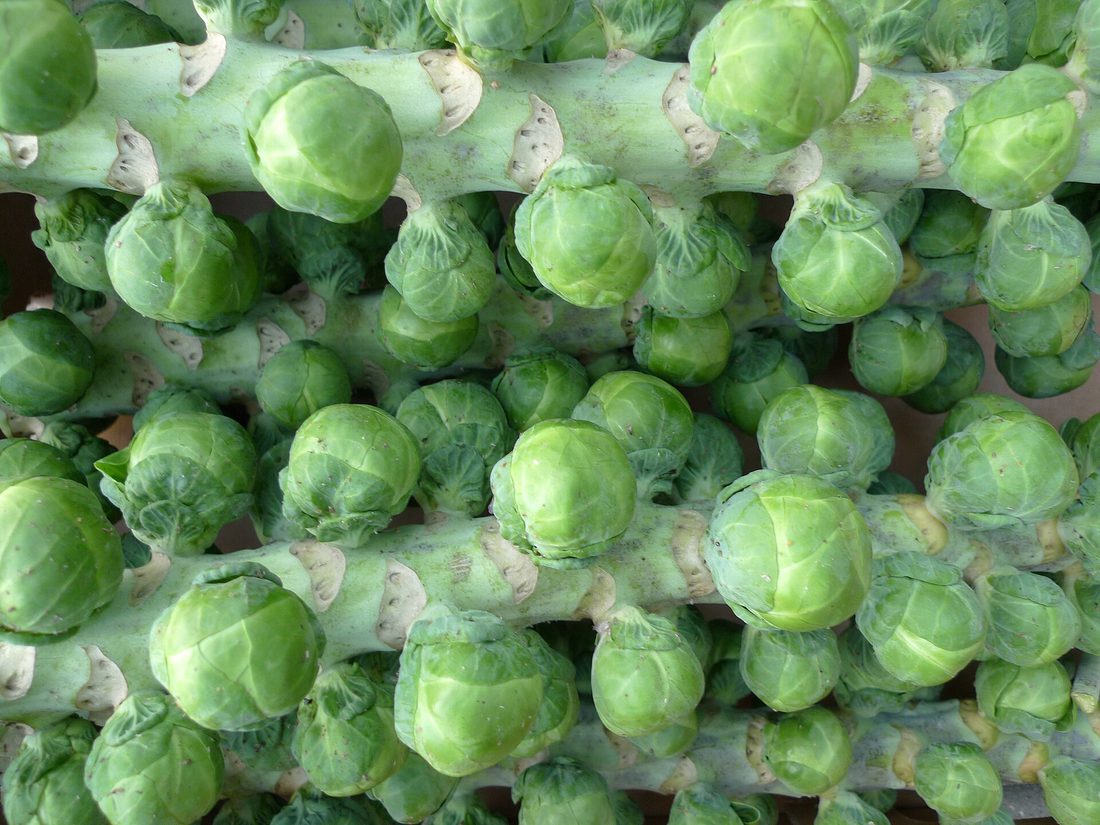
Broccoli, cabbage, cauliflower, kale, Brussels sprouts and kohlrabi are all the same species: Brassica oleracea, a scrubby wild coastal plant. People selected the plants with the largest flower buds and eventually had broccoli; selected for a tight terminal bud and had cabbage; for side buds and had sprouts; for leaves and had kale; for stem and had kohlrabi. Each is the result of choosing which individuals bred, generation after generation. If the question is whether selection can change a population substantially, the answer is in any vegetable aisle.
Artificial selection, or selective breeding, is the same mechanism as natural selection with a different source of the differential reproduction. The three ingredients are unchanged: heritable variation must exist, some individuals must leave more offspring than others, and the variation must be inherited. What differs is who decides — a breeder choosing which individuals reproduce rather than the environment doing it. That is why it is such good evidence for the natural process: the mechanism is visible, the generations are short enough to watch, and the results are dramatic.
The cost is in the gene pool — the total genetic variation present in a population. Breeding only from a few individuals with a desired characteristic means the next generation descends from those few, so variation is lost across the whole genome, not only at the gene being selected. A selection pressure applied hard and long produces a population that is excellent at one thing and has little variation left to meet anything else, which is why uniform crops are vulnerable to new diseases. And establishing that an improvement is inherited at all requires heritability evidence — a comparison in matched conditions, because a plant grown in better soil yields more regardless of its genes.
Build your understanding
Where this fits
Natural selection works through differences in reproductive success produced by the environment. This unit looks at what happens when people supply the selection instead, which is both the oldest evidence that populations can be changed and the clearest case of the cost that comes with it.
Use three flexible 40–45-minute sessions: core background and Parts 1–2 with their checks; Parts 3–4 and the worked application; then remaining practice, a labeled model, revision, and the exit check. Checks completed during reading can count toward the practice set. Read one short part at a time. Investigations and chapter review/quiz have separate sessions, and flexible weeks allow more time.
Part 1 · Who supplies the selection
In natural selection the environment determines which individuals leave more offspring: predators, drought, disease, competition. In artificial selection a person does, by choosing which individuals breed. The mechanism downstream is identical, which is exactly why the comparison is useful.
The requirements are also identical. There must be variation to select among — a breeder cannot create a characteristic that does not appear, only increase what does. The variation must be heritable, or selecting the best performers achieves nothing in the next generation. And the selection must be applied repeatedly, since one generation shifts a frequency only slightly.
The differences are in pace and direction. Artificial selection can be intense and consistent in a way natural conditions rarely are, which is why it produces large changes in dozens of generations rather than thousands. It also selects for what a person wants, which may be actively harmful to the organism — many breeds have health problems arising directly from characteristics that were selected for.
Pause and explain
Why can a breeder not select for a characteristic that no individual shows?
Check your reasoning after answering
Because selection acts on existing variation; it chooses among individuals rather than creating new forms. If no individual carries the characteristic, there is nothing to breed from. New variation arrives only through mutation and recombination, which is why breeders work with large and varied populations and why losing variation limits what can be selected for later.
Part 2 · Separating inherited performance from conditions
A high-performing individual may be high-performing because of its genes, because of the conditions it grew in, or both — which is the Chapter 5 problem in a practical setting. A breeder who selects the best plants in the best soil may simply be selecting the plants that had the best soil, and the next generation will disappoint.
The model shows the trap clearly. Plant A averages 12 seeds in favourable soil; plant B averages 9 in poorer soil. The difference of 3 seeds has two available explanations — inherited capacity and soil — and the comparison cannot separate them because both varied together. Breeding only A on the strength of this evidence may propagate nothing more than a memory of good soil.
The stronger comparison is the one Chapter 1 described. Grow A and B in matched conditions, with several plants of each and conditions randomised across positions, and compare yields. Better still, grow their offspring in matched conditions, since what a breeder needs to know is whether the advantage is transmitted — which is what heritability means.
Pause and explain
Plant A yields 12 seeds in good soil, plant B yields 9 in poor soil. Why can't you conclude A is genetically superior?
Check your reasoning after answering
Because genotype and soil differed together, so the 3-seed difference could come from either. This is a confound: the comparison cannot attribute the difference. Growing both in matched conditions, with several plants each and positions randomised, would isolate the inherited contribution — and growing their offspring in matched conditions would test whether any advantage is transmitted.
Part 3 · What is gained and what is given up
Selective breeding has produced most of the food people eat, and the gains are real: higher yields, disease resistance, animals suited to particular conditions, crops that ripen together or store well. None of this is in question.
The cost is variation. Breeding from a few selected individuals means the next generation descends from a narrow base, and the loss is across the whole genome rather than only at the characteristic selected for. Repeat over many generations and the population becomes genetically uniform — excellent at the selected trait and carrying little of anything else.
Uniformity is a vulnerability for the reason the biodiversity unit gave. A population of near-identical individuals meets a new disease with the same resources, so what defeats one defeats all. The Irish potato failure of the 1840s is the standard case: a crop grown overwhelmingly from a very narrow genetic base, and a new disease to which almost none of it was resistant.
Pause and explain
Why does breeding from a few selected individuals reduce variation across the whole genome, not just at the selected gene?
Check your reasoning after answering
Because the whole next generation descends from those few individuals, inheriting their entire genomes and not only the alleles that were selected for. Whatever variation existed elsewhere in the population, at genes nobody was looking at, is simply not passed on. Repeated over generations this produces a uniform population with little to draw on if conditions change.
Part 4 · Keeping variation for conditions that have not arrived
The response to the trade-off is to retain variation deliberately rather than to stop selecting. Seed banks hold many varieties, including ones with no current commercial value. Wild relatives of crops are collected and maintained, and have repeatedly supplied disease resistance that cultivated varieties had lost. Breeders keep diverse lines rather than a single best one.
The reasoning is the same as for insurance. The variation needed cannot be identified in advance, because the threat has not arrived — which is precisely why it must be kept rather than selected for. A variety that yields poorly today may carry the resistance that matters in twenty years, and once it is gone it cannot be recovered.
That connects this chapter back to the one before it. Diversity is worth maintaining because conditions change and the future cannot be specified, and that argument applies equally to a wild community and a cultivated one. It is also the last substantive idea of the course, which the capstone unit asks you to use.
Pause and explain
Why keep crop varieties that yield poorly today?
Check your reasoning after answering
Because the variation that will be needed cannot be identified in advance. A low-yielding variety may carry resistance to a disease that has not yet appeared, and wild relatives of crops have repeatedly supplied resistance that cultivated varieties had lost. Once a variety is gone the variation is unrecoverable, so it has to be kept before the need is known.
Apply the whole unit · Evaluate a fictional breeding proposal
Illustrative plants, not a real trial: plant A averages 12 seeds in favourable soil; plant B averages 9 seeds in poorer soil. A proposal states that breeding only from A proves an inherited yield improvement.
Your task
Explain the confound, propose a stronger comparison, and identify a diversity trade-off in the proposal.
What your response should show
- Explain the relevant biological process accurately.
- Use the supplied evidence and show calculation steps with units where needed.
- Connect a labeled model or mechanism with the claim.
- State an assumption, evidence limitation, or useful next observation.
Response guidance — after your attempt
Identify what varied together: genotype and soil quality both differ between A and B, so the 3-seed difference cannot be attributed to either.
Name the consequence: selecting A may propagate the effect of good soil rather than any inherited capacity.
Propose the stronger comparison: grow both in matched conditions, several plants of each, positions randomised, and ideally test their offspring in matched conditions too.
Identify the trade-off: breeding only from A narrows the gene pool across the whole genome, leaving less variation to meet a disease or a change in conditions.
The confound is that genotype and soil differ together. Plant A is both the plant with the higher yield and the plant in the favourable soil, so the 3-seed difference — 12 against 9 — could come from inherited capacity, from the soil, or from both in any proportion. The comparison cannot separate them, and acting on it risks propagating nothing more than the effect of good soil, which will not be inherited. A stronger comparison holds the conditions matched and varies only the plants: grow A and B in the same soil, with several plants of each rather than one, and positions randomised so that no line sits permanently in a better spot. Stronger still is to grow their offspring in matched conditions, because what a breeder needs is not whether A yields more but whether A's advantage is transmitted — which is what heritability means and what the original comparison never tested. The trade-off concerns the gene pool. Breeding only from A means the next generation descends from one line, so variation is lost across the whole genome and not only at whatever genes affect yield. Repeated over generations this produces a uniform crop that performs well under the conditions it was selected for and has little to draw on when conditions change — the vulnerability behind the Irish potato failure of the 1840s. Keeping other lines, including lower-yielding ones and wild relatives, preserves variation whose value cannot be identified until the threat arrives.
Scientific references for this unit
Parent / teacher teaching notes
Ask for a because-statement and a labeled relationship, not just a memorized word. Work through one calculation step at a time, permit oral or diagram responses, and use flexible sessions for difficult reading. Compare the learner’s actual evidence with the supplied model; do not reward copying or agreement with a personal preference. No private family, genetic, or medical records are required.
The key idea
Artificial selection occurs when people influence which organisms reproduce according to desired characteristics. It acts on available heritable variation and reproductive outcomes, while mutations can introduce new variation over time. A desired trait does not appear automatically because a breeder wants it.
Worked examples
Example 1 · Explain a dramatic result from an ordinary mechanism
- Variation: the wild plant's population varied in flower buds, terminal buds, side buds, leaves and stem.
- Differential reproduction: people bred only from the individuals strongest in whichever part they wanted, generation after generation.
- Inheritance: those features were heritable, so each line's offspring were shifted a little further in that direction each generation.
The mechanism is ordinary. The scale of the result comes from intensity and repetition.
Example 2 · Decide what a yield trial establishes
- Check the design: matched conditions and randomised positions mean the difference is attributable to the varieties rather than to location.
- State what is supported: X outyielded Y by 15% in this field, this season, under these conditions.
- State what is not: whether the advantage holds in other soils or seasons, and whether it is transmitted to offspring.
A good comparison supports a claim about the conditions it ran under. Transmission needs the next generation.
Avoid these mistakes
- Mistake: breeders create new characteristics. Selection acts on variation already present; new variation comes only from mutation and recombination.
- Mistake: the best-performing individual has the best genes. Plant A's 12 seeds in good soil against B's 9 in poor soil confounds genotype with conditions; matched conditions are needed.
- Mistake: narrowing a gene pool only affects the selected trait. The next generation inherits whole genomes from a few individuals, so variation is lost everywhere.
- Mistake: low-yielding varieties are worth discarding. The variation that will matter cannot be identified before the threat arrives, which is why seed banks keep what has no current value.
Check your understanding
Does training an individual automatically count as selective breeding?
Discuss the answer
No. Selective breeding changes which organisms reproduce based on traits; training changes an individual’s experience.
Why compare environments before selecting for size?
Discuss the answer
Resource differences can affect size; without comparable conditions, the chosen characteristic may not reflect an inherited contribution.
Words to know
- artificial selection
- Selection in which a person rather than the environment decides which individuals reproduce; the mechanism downstream is identical to natural selection.
- selective breeding
- Repeatedly breeding from individuals with a desired characteristic; it acts on existing variation and cannot create a characteristic nothing shows.
- gene pool
- The total genetic variation in a population; breeding from a few individuals narrows it across the whole genome, not only at the selected gene.
- heritability evidence
- A comparison in matched conditions, ideally of offspring, showing that an advantage is transmitted rather than produced by circumstances.
- selection pressure
- The force determining which individuals leave more offspring; applied hard and long it produces a population excellent at one thing and uniform in everything else.
Extend your scientific explanation
Compare a second supplied example or the linked educational reference. Identify a connection, a model limit, and an additional observation that would test the explanation.
In the real world
Use a clear question, reliable observations, and a biological mechanism to evaluate a claim. State what remains uncertain before applying a classroom model to a different setting.
Exit check
Why can a uniform variety be vulnerable to one particular threat?
Check your explanation after answering
If individuals share a susceptible inherited response, a threat targeting that response can affect many; the actual effect needs evidence.
Explain your reasoning without notes. If a key idea is missing, revisit the lesson and try again.
Problem 1
Answer and explanation
No. Selective breeding changes which organisms reproduce based on traits; training changes an individual’s experience.
Problem 2
Answer and explanation
Resource differences can affect size; without comparable conditions, the chosen characteristic may not reflect an inherited contribution.
Problem 3
Answer and explanation
No. Other outcomes and tradeoffs need separate evidence.
Problem 4
Answer and explanation
If individuals share a susceptible inherited response, a threat targeting that response can affect many; the actual effect needs evidence.
Problem 5
Answer and explanation
The observed yield difference does not isolate an inherited advantage because soil differs. Compare parent and offspring performance under suitable matched conditions and independent replicates. Selecting only a narrow group may reduce variation, so measure other outcomes and possible vulnerabilities rather than declaring universal improvement from one trait.
Notice unequal soil conditions.
Compare replicated offspring under matched conditions.
Consider narrowing inherited variation.
Response criteria
- Explain the relevant biological process accurately.
- Use the supplied evidence and show calculation steps with units where needed.
- Connect a labeled model or mechanism with the claim.
- State an assumption, evidence limitation, or useful next observation.
Problem 6
Answer and explanation
No. Selection acts on heritable variation and reproductive contribution; new changes are not guaranteed or produced by desire.
Response criteria
- Explain the relevant biological process accurately.
- Use the supplied evidence and show calculation steps with units where needed.
- Connect a labeled model or mechanism with the claim.
- State an assumption, evidence limitation, or useful next observation.
Problem 7
- Parents in entirely different conditions only
- Offspring groups under matched conditions with replication
- Only the highest one result
- A label saying best
Answer and explanation
Offspring groups under matched conditions with replication
Matched offspring comparisons address environmental differences and variability.
Problem 8
Answer and explanation
30 %
15/50×100=30%, without assuming universal advantage.