Fossils, Rock Layers & Life History — Print · Grade 7 Science
Chapter: Evolution, Evidence & Life HistoryFossils, Rock Layers & Life History
Learning goals
- I can explain fossils, rock layers & life history.
- I can use evidence, a model, and stated assumptions to support a biological explanation.
Before this unit
Use the supplied vocabulary, distinguish an observation from an explanation, and identify any units or model assumptions. Revisit a connected earlier unit if needed; new terms are explained here.
Use three flexible 40–45-minute sessions: core background and Parts 1–2 with their checks; Parts 3–4 and the worked application; then remaining practice, a labeled model, revision, and the exit check. Checks completed during reading can count toward the practice set. Read one short part at a time. Investigations and chapter review/quiz have separate sessions, and flexible weeks allow more time.
An animal dies. Almost always, it is eaten, scattered, and decomposed within weeks, and nothing remains. Occasionally it is buried quickly in sediment where decomposers cannot reach it, and over long periods minerals replace its hard parts and the sediment turns to rock. A fossil is what survives that extremely unlikely sequence, which is the single most important thing to know about the fossil record: it is not a sample of past life, it is a sample of the organisms that happened to die in the right circumstances and were later found.
That bias runs in predictable directions. Hard parts survive and soft bodies rarely do, so shells and bones are overrepresented and worms and jellyfish are nearly absent. Organisms living where sediment accumulates — coasts, lake beds, floodplains — are far more likely to be preserved than those on dry uplands where rock erodes. And a fossil must also be exposed and found, so the record reflects where geologists have worked. A trace fossil — a footprint, a burrow, a tooth mark, droppings — preserves no part of the organism and records behaviour instead, which is why traces are valuable rather than second-best.
Dating comes in two kinds and they answer different questions. Relative age is order without numbers: in undisturbed layers, deeper means older, so a fossil below another is earlier. That principle is simple, reliable where the layers are undisturbed, and gives no years at all. Numerical ages come from other methods entirely. Extinction — a species ceasing to exist — is read from the record too, and carefully, because the fossil record is patchy: a species vanishing from one sequence of layers may have died out, or moved, or simply stopped being preserved there. Several of the species declared extinct from the record have later been found alive.
Build your understanding
Where this fits
Everything so far has been about how living things work now. This last chapter asks how they came to be as they are, and it starts with the only direct evidence of life in the past. The unit's main business is learning what that evidence can establish and what it cannot, because the fossil record is both remarkable and deeply incomplete.
Use three flexible 40–45-minute sessions: core background and Parts 1–2 with their checks; Parts 3–4 and the worked application; then remaining practice, a labeled model, revision, and the exit check. Checks completed during reading can count toward the practice set. Read one short part at a time. Investigations and chapter review/quiz have separate sessions, and flexible weeks allow more time.
Part 1 · Types of evidence, and what each one preserves
Body fossils preserve part of the organism — bone, shell, wood, occasionally an impression of softer tissue. They answer questions about structure: size, shape, how parts fitted together, sometimes growth and injury. What they rarely preserve is anything soft, so the picture is skewed towards animals with hard parts.
Trace fossils preserve activity instead. A trackway records how an animal moved, how fast, and whether it travelled alone or in a group. A burrow records how it lived; coprolites record what it ate. None of these tells you what the animal looked like, and no body fossil tells you how it behaved — the two kinds of evidence answer different questions and are strongest together.
Both have the same fundamental limit: they record what was preserved. An absence in the record is therefore weak evidence of absence in life, and the strength of that weakness depends on the setting. No trace of soft-bodied animals in a coarse sandstone means very little; their absence from a fine-grained deposit that preserves soft tissue elsewhere means considerably more.
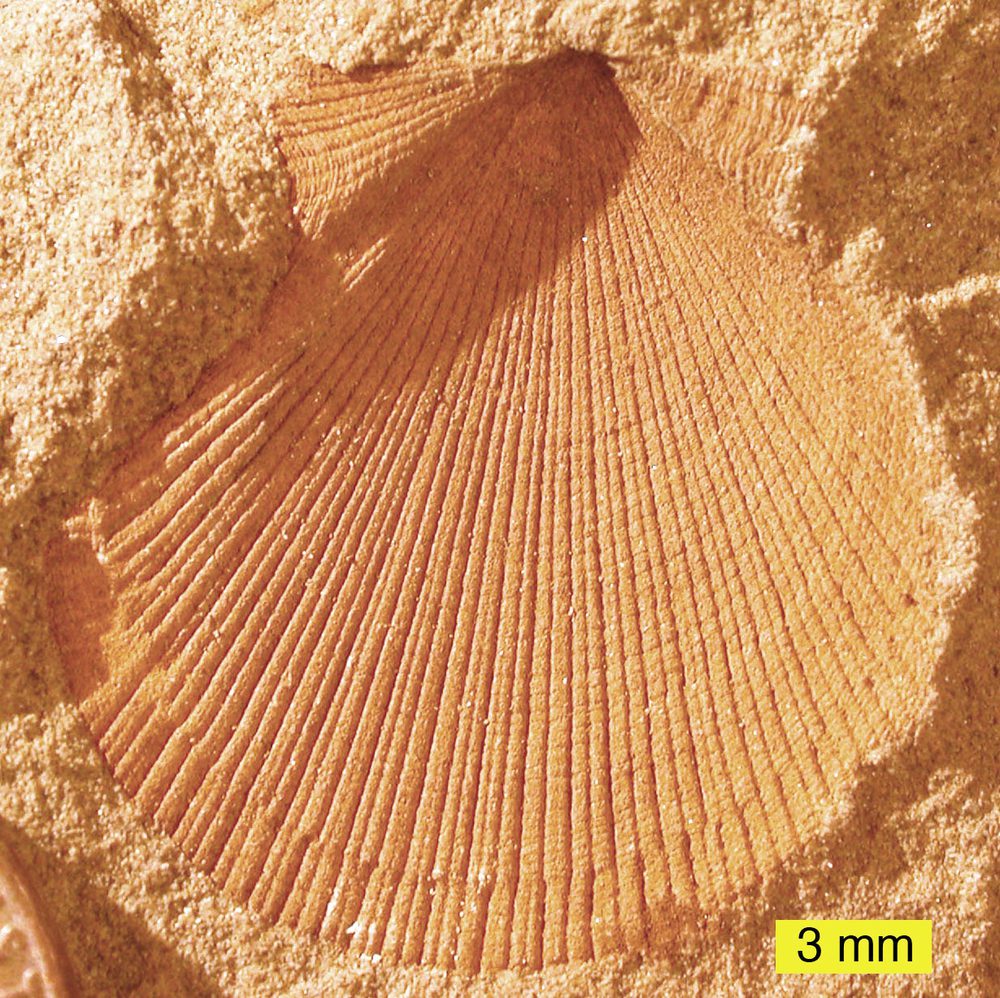
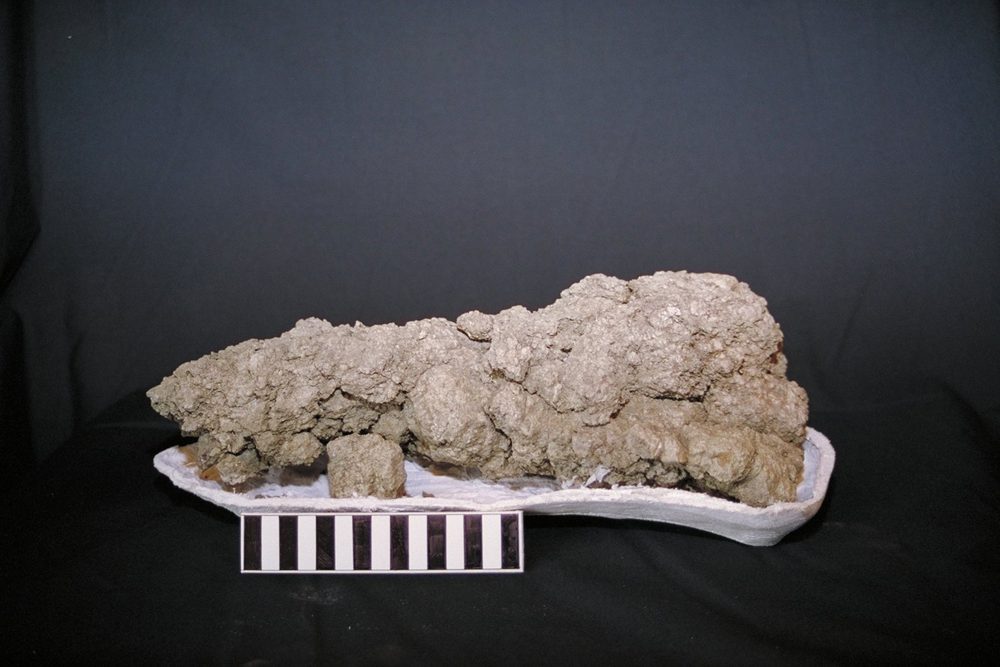
Pause and explain
What can a trackway tell you that a skeleton cannot, and the reverse?
Check your reasoning after answering
A trackway records behaviour — how the animal moved, its speed and stride, whether it travelled in a group — none of which a skeleton preserves. A skeleton records structure: size, shape, how the parts fitted together, sometimes injury or growth. Neither substitutes for the other, which is why trace fossils are a different kind of evidence rather than a lesser one.
Part 2 · Reading order from undisturbed layers
Sediment accumulates from the bottom up, so in a sequence that has not been disturbed, each layer is younger than the one beneath it. That gives relative age: a fossil in a lower layer lived earlier than one above. The word undisturbed is doing real work, since layers can be folded, overturned or cut through, and geologists check for that before applying the principle.
Work a sequence. The bottom layer contains Species A; the middle contains A and B; the top contains B. The relative order is bottom then middle then top, so A appears first, A and B overlap for a period, and in the uppermost layer only B is detected. That is a clear pattern and it is a pattern of detection rather than of existence.
Relative order gives no durations. Those three layers might represent three thousand years or three million; a thick layer can form quickly in a flood and a thin one over millennia. Saying "A is older than B" is supported; saying "A lived for ten thousand years" is not, without dating of a different kind.
Pause and explain
In undisturbed layers, the bottom contains Species A, the middle A and B, and the top B. What is supported?
Check your reasoning after answering
That A appears earlier in the sequence than B, that the two overlap in the middle layer, and that only B is detected in the uppermost. The order is relative: it gives no years, no durations, and no indication of how much time any layer represents. It is also a record of what was detected, not of everything that lived.
Part 3 · Gaps, and what an absence can support
The record has gaps at every scale. Periods when no sediment was laid down leave nothing. Erosion removes layers that did form. Preservation requires conditions that are rare. Finding requires exposure and someone looking. Each stage filters what survives to be studied, and the filters are not random.
So a species disappearing from a sequence of layers has several possible explanations. It became extinct. It moved somewhere the conditions preserved nothing. The environment changed so that fossils stopped forming. Or nobody has found the later specimens yet. Distinguishing these needs evidence from a wider area — other sequences, other regions, continuous deposits — rather than a deeper reading of the same cliff.
The honest claim is therefore about detection: "Species A is not detected above the middle layer at this site." An extinction claim is stronger, and the evidence for one is a species absent across many well-sampled sequences over a sustained period, not absent from one. Coelacanths were known only as fossils and declared long extinct until a living one was landed off South Africa in 1938.
Pause and explain
A species appears in lower layers and not in upper ones at a site. Why is "it went extinct" more than the evidence supports?
Check your reasoning after answering
Because several other explanations fit equally. The species may have moved elsewhere, conditions may have stopped preserving it, the layers may have eroded, or later specimens may simply not have been found. The supported claim is that it is not detected above a certain layer at this site; extinction needs absence across many well-sampled sequences.
Part 4 · Change over time is not a ladder
The record shows change: different organisms in different layers, lineages appearing and disappearing, forms that no longer exist. What it does not show is progress towards anything. Later does not mean better, and no organism in the record was working towards a current one.
The ladder picture is tempting because we read sequences from bottom to top and we are at the top of our own. But bacteria, which appear in the oldest rocks, are also in the newest, and they are not an early stage of anything — they have been adapting throughout, as everything else has. A branching tree is the right shape, and the final units of this chapter build it.
That framing also protects a scientific habit. If change is read as progress, every fossil gets slotted into a march towards the present and the actual question — which lineage split from which, and when — disappears. Reading the record as a set of relationships rather than a ranking is what makes the next three units possible.
Pause and explain
Why is it wrong to read a sequence of fossils as a ladder of progress?
Check your reasoning after answering
Because later organisms are not improvements on earlier ones and nothing in the past was working towards the present. Bacteria appear in the oldest rocks and in the newest, adapting throughout rather than being an early stage. The record shows which lineages existed when and how they relate, which is a branching tree rather than a ranking.
Apply the whole unit · Read a fossil-layer model
Illustrative upright undisturbed layers, not a surveyed site: the bottom layer contains Species A; the middle contains A and B; the top contains B. No numerical ages are given and no complete regional survey is supplied.
Your task
State the relative order, describe the pattern of detected species, and qualify a claim that Species A became extinct.
What your response should show
- Explain the relevant biological process accurately.
- Use the supplied evidence and show calculation steps with units where needed.
- Connect a labeled model or mechanism with the claim.
- State an assumption, evidence limitation, or useful next observation.
Response guidance — after your attempt
Apply the principle of undisturbed layers: the bottom is oldest and the top is youngest, so the order is bottom, middle, top.
Describe the pattern: A is detected in the bottom and middle layers, B in the middle and top, so the two overlap in the middle.
State what is not available: no numerical ages, so no durations, and no indication of how much time each layer represents.
Qualify the extinction claim: A is not detected above the middle layer at this site, which is consistent with extinction and also with movement, a change in preservation conditions, or incomplete searching.
The relative order is bottom, then middle, then top, since in undisturbed layers each is younger than the one beneath. The detected pattern is that Species A appears in the bottom and middle layers, Species B in the middle and top, and the two overlap in the middle — so A appears earlier in this sequence than B, and the uppermost layer contains only B. That is as much as the sequence supports on its own, and two qualifications matter. First, there are no numerical ages, so nothing can be said about durations: the three layers might represent thousands of years or millions, and a thick layer can form quickly in a flood while a thin one takes millennia. Second, and more important, this is a record of detection rather than of existence. An extinction claim for Species A goes beyond it. The species may have become extinct, but it may equally have moved to a region where conditions preserved nothing, or the environment at this site may have changed so that fossils of that kind stopped forming, or later specimens may exist and not yet have been found. The fossil record filters at every stage — preservation requires rare conditions, layers erode, and finding requires exposure and someone looking. Supporting extinction would need absence across many well-sampled sequences in different regions over a sustained period. The coelacanth is the standing warning: known only as a fossil and considered long extinct until a living one was landed in 1938.
Scientific references for this unit
Parent / teacher teaching notes
Ask for a because-statement and a labeled relationship, not just a memorized word. Work through one calculation step at a time, permit oral or diagram responses, and use flexible sessions for difficult reading. Compare the learner’s actual evidence with the supplied model; do not reward copying or agreement with a personal preference. No private family, genetic, or medical records are required.
The key idea
Fossils preserve evidence of past life, including remains, impressions, and traces such as tracks. Preservation is uncommon and depends on conditions. Hard parts, rapid burial, and particular environments are often more likely to leave records than soft material exposed to decay. The fossil record is therefore informative and incomplete.
Worked examples
Example 1 · Explain a bias in the record
- Identify what preservation requires: rapid burial away from decomposers, and usually hard parts that minerals can replace.
- Apply it to shells: hard calcium carbonate shells in sediment-rich coastal waters meet both conditions routinely.
- Apply it to worms: soft bodies decompose within days and leave nothing unless conditions are exceptional.
Ask what the record selects for before treating a pattern in it as a pattern in life.
Example 2 · Judge an order claim with disturbed layers
- State the condition the rule requires: layers must be undisturbed and still the way up they were deposited.
- Identify the problem: in an overturned section, the deeper layer is the younger one, so the rule gives the reverse answer.
- Say what comes first: establishing which way up the sequence is, using features that record the original top, before reading any order.
Check the condition before applying the principle. Undisturbed is doing the work in that sentence.
Avoid these mistakes
- Mistake: the fossil record is a sample of past life. It is a sample of organisms that died in rare preserving conditions and were later found — biased towards hard parts, sediment-rich settings and well-searched regions.
- Mistake: a species absent from upper layers went extinct. It may have moved, stopped being preserved, or not yet been found; the coelacanth was declared extinct and landed alive in 1938.
- Mistake: relative age gives time. Deeper is older gives order only; a thick layer can form in a flood and a thin one over millennia.
- Mistake: the record shows progress. Bacteria are in the oldest rocks and the newest; the shape is a branching tree, not a ladder towards the present.
Check your understanding
Can a footprint be a fossil without a preserved body?
Discuss the answer
Yes. It can preserve evidence of an organism’s activity and is a trace fossil.
Does the relative order give exact years?
Discuss the answer
No. It gives an older-younger relationship under the assumptions; numerical ages need additional dating evidence.
Words to know
- fossil
- Remains or traces of past life preserved in rock through a rare sequence of events, so the record samples what was preserved rather than what lived.
- trace fossil
- A footprint, burrow, tooth mark or dropping, preserving behaviour rather than any part of the organism.
- relative age
- Order without numbers: in undisturbed layers, deeper is older, which gives sequence but no durations.
- extinction
- A species ceasing to exist; claiming it from one site confuses absence of detection with absence of the species.
- fossil record
- The whole body of fossil evidence — biased towards hard parts, towards places where sediment accumulates, and towards places geologists have searched.
Extend your scientific explanation
Compare a second supplied example or the linked educational reference. Identify a connection, a model limit, and an additional observation that would test the explanation.
In the real world
Use a clear question, reliable observations, and a biological mechanism to evaluate a claim. State what remains uncertain before applying a classroom model to a different setting.
Exit check
Why is “newer means more perfect” not a scientific conclusion?
Check your explanation after answering
Perfection is not a defined biological measure, and evolution involves branching and context-dependent traits rather than one universal ranking.
Explain your reasoning without notes. If a key idea is missing, revisit the lesson and try again.
Problem 1
Answer and explanation
Yes. It can preserve evidence of an organism’s activity and is a trace fossil.
Problem 2
Answer and explanation
No. It gives an older-younger relationship under the assumptions; numerical ages need additional dating evidence.
Problem 3
Answer and explanation
Preservation, exposure, and sampling vary, so an organism may leave no detected record.
Problem 4
Answer and explanation
Perfection is not a defined biological measure, and evolution involves branching and context-dependent traits rather than one universal ranking.
Problem 5
Answer and explanation
The bottom layer is relatively oldest and the top youngest under the stated assumptions. A is not detected in the top record, while B occurs in middle and top. This local pattern alone does not prove A became extinct everywhere or supply exact dates. Preservation, sampling, and other locations need consideration.
Order bottom before middle before top.
A is detected in lower two; B in upper two.
Separate local non-detection from global extinction.
Response criteria
- Explain the relevant biological process accurately.
- Use the supplied evidence and show calculation steps with units where needed.
- Connect a labeled model or mechanism with the claim.
- State an assumption, evidence limitation, or useful next observation.
Problem 6
Answer and explanation
No. The simple rule assumed upright undisturbed deposition. Investigate the geological history before assigning order.
Response criteria
- Explain the relevant biological process accurately.
- Use the supplied evidence and show calculation steps with units where needed.
- Connect a labeled model or mechanism with the claim.
- State an assumption, evidence limitation, or useful next observation.
Problem 7
- A preserved footprint
- A graph axis
- A fictional budget
- A lens factor
Answer and explanation
A preserved footprint
A footprint records activity rather than preserving the whole body.
Problem 8
Answer and explanation
Preservation and exposure vary, and collections sample limited places and materials. Many organisms leave no detected fossil in that collection.