Coordination, Defense & Reproduction — Print · Life Science & Scientific Inquiry, Grade 7
Five focused units, a three-session investigation, chapter review, and chapter quiz.
Printable chapter lessons and review.
The Nervous System, Senses & Responses
Learning goals
- I can explain the nervous system, senses & responses.
- I can use evidence, a model, and stated assumptions to support a biological explanation.
Before this unit
Use the supplied vocabulary, distinguish an observation from an explanation, and identify any units or model assumptions. Revisit a connected earlier unit if needed; new terms are explained here.
Use three flexible 40–45-minute sessions: core background and Parts 1–2 with their checks; Parts 3–4 and the worked application; then remaining practice, a labeled model, revision, and the exit check. Checks completed during reading can count toward the practice set. Read one short part at a time. Investigations and chapter review/quiz have separate sessions, and flexible weeks allow more time.
Touch something painfully hot and your hand is already moving before you feel the pain. That ordering is not an illusion and it is the clearest evidence of how your nervous system is arranged. The signal to withdraw does not travel to your brain, get considered, and come back. It takes a short route through your spinal cord and returns to the muscle directly, while a separate signal continues upward and arrives in your conscious awareness a fraction of a second later. You feel the burn after the withdrawal because the response was never waiting for you.
The pathway has named parts. A stimulus is any change the body can detect — heat, pressure, light, a chemical, a sound. A receptor is the structure that detects a particular kind of stimulus; receptors are specific, so a light receptor in your eye cannot detect sound, and pain receptors in your skin cannot detect colour. The signal then travels along a neuron, a cell specialised for carrying electrical signals, some of them extending nearly a metre from the base of your spine to your foot. A response is what finally happens: a muscle contracts or a gland releases something. Stimulus, receptor, neuron, effector, response — that sequence is the backbone of every example in this unit.
A reflex is the short route: receptor to spinal cord to muscle, with the brain informed rather than consulted. It is fast — typically well under a tenth of a second — and it is involuntary, which is precisely what makes it useful for withdrawal from damage, blinking, and keeping your balance. A deliberate response takes the longer path through the brain, where the signal is interpreted, weighed against memory and intention, and acted on or not. The two differ in route and therefore in speed, and the trade is the familiar one: the reflex is quick and inflexible, the deliberate response is slower and can take account of everything you know.
Build your understanding
Where this fits
The last chapter delivered materials to cells and removed the waste. None of that explains how a body acts as one thing — how a hand pulls back before you have thought about it. This chapter is about coordination, defence and reproduction, and it starts with the system that carries information fast enough to matter.
Use three flexible 40–45-minute sessions: core background and Parts 1–2 with their checks; Parts 3–4 and the worked application; then remaining practice, a labeled model, revision, and the exit check. Checks completed during reading can count toward the practice set. Read one short part at a time. Investigations and chapter review/quiz have separate sessions, and flexible weeks allow more time.
Part 1 · Stimulus and receptor are not the same thing
The stimulus is the change in the world; the receptor is the biological structure that detects it. Keeping them apart matters because a stimulus only exists for an organism that has a receptor for it. Bees detect ultraviolet patterns on flowers that are invisible to you, not because the light is not there but because you have no receptor for it. Some snakes detect infrared, some fish detect electric fields, and a dog's sense of smell operates at concentrations you cannot register at all.
Receptors are specific, and that specificity is structural. A receptor responds to one kind of change because of how it is built, which is why your eye cannot hear and your ear cannot see. It also means an organism's experience of its surroundings is bounded by the receptors it has — a useful corrective to assuming that what you can detect is what is there.
Receptors also adapt. Step into cold water and it is shocking; a minute later it is tolerable, though the water has not warmed. The receptors have reduced their rate of signalling in response to a constant stimulus, which is why you stop noticing the clothes you are wearing. Detection is about change more than about absolute level.
Pause and explain
A bee visits a flower with markings you cannot see. Does the flower have those markings?
Check your reasoning after answering
Yes. The markings reflect ultraviolet light, which is present whether or not anyone detects it. The bee has receptors sensitive to ultraviolet and you do not, so the stimulus exists and only one of you can respond to it. A stimulus is a change in the world; detecting it requires a receptor built for that kind of change.
Part 2 · Following information through the pathway
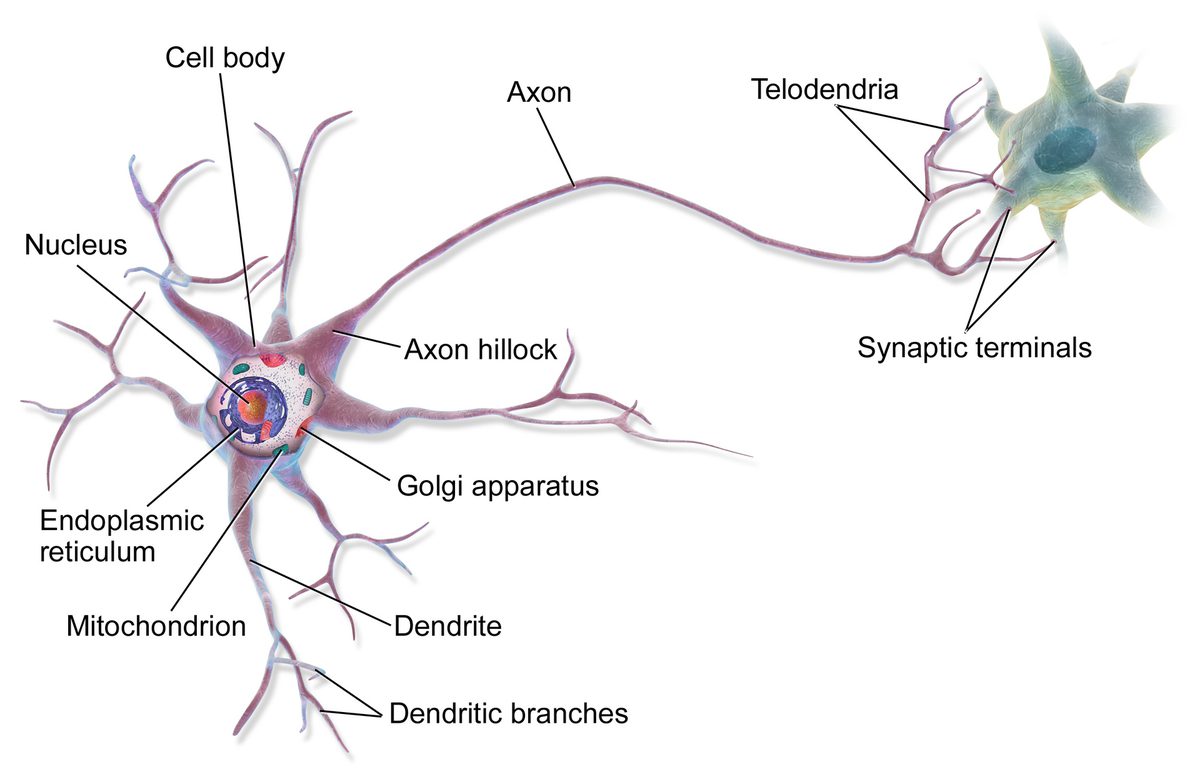
Neurons carry signals as electrical impulses along a long fibre, and they are built for it: a single neuron can run from the base of your spine to your toes. Where one neuron meets the next there is a tiny gap, and the signal crosses it chemically — a transmitter released on one side, detected on the other. That junction is where signals can be modified, blocked or combined, which is what makes the nervous system more than wiring.
The sequence is always the same. A receptor detects a stimulus and generates a signal. Sensory neurons carry it towards the spinal cord or brain. There it may pass directly to a motor neuron, or travel up for processing. A motor neuron carries the outgoing signal to an effector, which is a muscle or a gland, and the effector produces the response.
Speed comes from the route and from the fibre. Signals in large, insulated fibres travel much faster than in small bare ones, and the body uses the fast ones where speed matters. But the biggest single factor is how far the signal goes and how many junctions it crosses, which is why the reflex route is organised to minimise both.
Pause and explain
Put these in order and name each: muscle contracts, sensory neuron carries the signal, skin receptor detects heat, motor neuron carries the signal out.
Check your reasoning after answering
Skin receptor detects the heat — that is the receptor responding to a stimulus. A sensory neuron carries the signal towards the spinal cord. A motor neuron carries the outgoing signal to the effector. The muscle contracts — that is the response. The pathway is always stimulus, receptor, sensory neuron, processing, motor neuron, effector, response.
Part 3 · Why reflexes exist alongside deliberate action
A reflex trades flexibility for speed. The route is short, the number of junctions small, and no interpretation takes place, so withdrawal from a hot surface happens in a fraction of the time a considered decision would take. You cannot decide to have a different reflex, and that is the point — damage happens faster than deliberation.
Deliberate responses take the long route through the brain, where the incoming signal is compared with memory, context and intention. That costs time and buys everything a reflex cannot do: you can catch a dropped glass or deliberately hold a hot plate for the two seconds it takes to reach the counter, both of which require overriding what a reflex alone would produce.
The two coexist in the same action. Walking involves continuous reflex adjustments to balance that you never notice, inside a deliberate decision about where to go. Describing a behaviour well usually means saying which parts are reflex and which are deliberate, rather than treating the whole thing as one or the other.
Pause and explain
Why is a withdrawal reflex faster than a deliberate decision to move your hand?
Check your reasoning after answering
Because the route is shorter and crosses fewer junctions. The signal goes from receptor to spinal cord to motor neuron to muscle, without travelling to the brain to be interpreted against memory and intention. The brain is informed in parallel, which is why you feel the pain just after the hand has already moved.
Part 4 · Reading a reaction time for what it is
A reaction-time test measures one specific pathway on one occasion: a particular stimulus, a particular receptor, a particular response, under whatever conditions prevailed. It is affected by how alert you are, whether you were expecting the signal, practice, temperature, caffeine, and how the task was explained. Repeating it three times tells you about those three attempts.
So the honest statement names the task. "Mean 0.25 seconds across three trials, range 0.10 seconds, catching a dropped ruler with the dominant hand" is a measurement. "This person has fast reactions" generalises beyond one task, and "this measures intelligence" is a different kind of claim altogether — reaction time measures the speed of a signal pathway, and nothing in the measurement bears on reasoning, knowledge or judgement.
This matters beyond the arithmetic. Measurements of people get used to rank people, and the step from a number to a judgement about a person is exactly where the reasoning from Chapter 1 should be applied hardest. Ask what was measured, under what conditions, and what the number could not have detected.
Pause and explain
Why does a reaction time of 0.25 seconds not measure how clever someone is?
Check your reasoning after answering
Because it measures how fast one signal pathway completed one task on one occasion — detection, transmission and response — under conditions including alertness, expectation and practice. Reasoning, knowledge and judgement involve entirely different processes that the test never engages. The number is a measurement of a pathway, not of a person.
Apply the whole unit · Interpret a response record
Illustrative timing trials for one defined task, not clinical data: 0.20, 0.25 and 0.30 seconds. A draft reports the mean as a complete measure of the person's intelligence.
Your task
Calculate the mean and the range, describe in general terms the pathway the test measured, and correct the draft's claim.
What your response should show
- Explain the relevant biological process accurately.
- Use the supplied evidence and show calculation steps with units where needed.
- Connect a labeled model or mechanism with the claim.
- State an assumption, evidence limitation, or useful next observation.
Response guidance — after your attempt
Mean: (0.20 + 0.25 + 0.30) ÷ 3 = 0.75 ÷ 3 = 0.25 seconds.
Range: 0.30 − 0.20 = 0.10 seconds, which is a substantial spread relative to the mean across only three trials.
Describe the pathway: a stimulus detected by a receptor, carried by sensory neurons, processed, carried out by motor neurons to a muscle, which produces the response.
Correct the claim: the test measured the speed of that pathway on one task; intelligence involves reasoning and knowledge the test never engages.
The mean is 0.25 seconds, from (0.20 + 0.25 + 0.30) ÷ 3, and the range is 0.30 − 0.20 = 0.10 seconds. That range is worth noticing: a spread of 0.10 around a mean of 0.25 is large in proportion, and with only three trials the mean is not a stable estimate — practice, alertness and expectation can move it easily. What the test measured is a signal pathway: a stimulus detected by a receptor, a signal carried along sensory neurons to the central nervous system, processed there, and carried out along motor neurons to a muscle that produced the response. Each stage takes time, and the total is what the stopwatch recorded. The draft's claim does not follow. Intelligence, however it is defined, involves reasoning, knowledge, memory and judgement, none of which this task required and none of which a transmission speed could reveal. The measurement also has no control for the conditions that affect it — whether the person was expecting the signal, how many practice attempts they had, how alert they were, the temperature of the room. A defensible report would read: mean 0.25 seconds, range 0.10 seconds, over three trials of one stated task, under unstated conditions, which measures the speed of one response pathway and nothing about the person beyond it.
Scientific references for this unit
Parent / teacher teaching notes
Ask for a because-statement and a labeled relationship, not just a memorized word. Work through one calculation step at a time, permit oral or diagram responses, and use flexible sessions for difficult reading. Compare the learner’s actual evidence with the supplied model; do not reward copying or agreement with a personal preference. No private family, genetic, or medical records are required.
The key idea
The nervous system receives information, processes it, and helps coordinate responses. Receptors respond to particular stimuli, such as light or pressure, and signals travel through nervous pathways. The brain and spinal cord contribute to processing; nerves connect with other parts of the body. A sensory experience involves more than a receptor alone.
Worked examples
Example 1 · Explain an ordering you can feel
- Identify the two routes the signal takes: a short one through the spinal cord to the muscle, and a longer one up to the brain.
- Compare the distances and junctions: the reflex route is shorter and crosses fewer junctions, so it completes sooner.
- Connect to what you experience: the withdrawal is produced by the short route, and conscious pain arrives when the longer signal reaches the brain.
The order of your own experience is evidence about the route a signal takes.
Example 2 · Say what a measurement cannot cover
- Identify what the task measures: one pathway, one stimulus type, one response, on one occasion.
- List what else affects the number: expectation, practice, alertness, hand used, how the task was explained, temperature.
- Consider what is not measured: every other sensory system, coordination, endurance, and anything requiring judgement.
Name the task, the conditions and the number of trials before drawing any conclusion about a person.
Avoid these mistakes
- Mistake: the brain decides to pull your hand away. The reflex route goes receptor to spinal cord to muscle; the brain is informed in parallel, which is why you feel the pain after the hand has moved.
- Mistake: a stimulus only exists if you can detect it. Ultraviolet flower markings are present whether or not you have a receptor for them; a bee does.
- Mistake: stimulus and receptor are two words for the same thing. The stimulus is the change in the world; the receptor is the structure built to detect that kind of change.
- Mistake: reaction time measures intelligence. It measures how fast one signal pathway completed one task, and is affected by expectation, practice and alertness.
Check your understanding
Is a receptor alone the whole sensory experience?
Discuss the answer
No. Signals and processing contribute to perception, interpretation, and response.
Does seeing a ball mean the ball travels through a nerve?
Discuss the answer
No. Signals carry information about detected light; the physical ball does not move through the nerve pathway.
Words to know
- stimulus
- A change the body can detect — heat, pressure, light, a chemical — which exists in the world whether or not an organism has a receptor for it.
- receptor
- A structure that detects one particular kind of stimulus; specificity is structural, which is why an eye cannot hear.
- neuron
- A cell specialised for carrying electrical signals, some running nearly a metre, with chemical junctions between them where signals can be modified.
- reflex
- A fast involuntary response using a short route through the spinal cord, with the brain informed rather than consulted.
- response
- What the body finally does — a muscle contracting or a gland releasing something — at the end of the pathway.
Extend your scientific explanation
Compare a second supplied example or the linked educational reference. Identify a connection, a model limit, and an additional observation that would test the explanation.
In the real world
Use a clear question, reliable observations, and a biological mechanism to evaluate a claim. State what remains uncertain before applying a classroom model to a different setting.
Exit check
Can one reaction-time score establish overall intelligence?
Check your explanation after answering
No. It measures one task under particular conditions and can be affected by several non-intelligence factors.
Explain your reasoning without notes. If a key idea is missing, revisit the lesson and try again.
Homeostasis, Feedback & Interacting Systems
Learning goals
- I can explain homeostasis, feedback & interacting systems.
- I can use evidence, a model, and stated assumptions to support a biological explanation.
Before this unit
Use the supplied vocabulary, distinguish an observation from an explanation, and identify any units or model assumptions. Revisit a connected earlier unit if needed; new terms are explained here.
Use three flexible 40–45-minute sessions: core background and Parts 1–2 with their checks; Parts 3–4 and the worked application; then remaining practice, a labeled model, revision, and the exit check. Checks completed during reading can count toward the practice set. Read one short part at a time. Investigations and chapter review/quiz have separate sessions, and flexible weeks allow more time.
Your core temperature sits near 37 degrees whether you are in a cold room or a hot one, and the chemistry of your cells depends on it staying there: enzymes work within a range and are disabled outside it. Holding a condition steady while the surroundings change is homeostasis, and it is one of the characteristics of life from Chapter 1. The word steady is slightly misleading, though. Nothing is held at an exact value. What actually happens is that the condition drifts, the drift is detected, and a response pushes it back, so the real picture is a quantity wobbling within a working range rather than sitting at a point.
The mechanism is feedback: the output of a system is fed back as information that changes the system's behaviour. The useful kind for stability is negative feedback, where a deviation triggers a response that reduces it. Too hot and you sweat and your skin vessels widen, both of which lose heat; too cold and you shiver and those vessels narrow, both of which conserve or generate it. Each response opposes the change that caused it, which is what the word negative means here — not that anything is bad, but that the correction runs opposite to the deviation.
Some corrections travel by nerve and some by hormone, a chemical messenger released into the blood by a gland. Hormones are slower than nerve signals and they reach everywhere, which sounds imprecise until you see how the specificity is achieved: a hormone only affects a target cell that carries a receptor for it. The body can therefore broadcast a message to the whole bloodstream and have it acted on only where it matters. Insulin is the standard case — released when blood glucose rises, detected by cells with insulin receptors, which take up more glucose, and glucose falls. Detect, respond, reduce the deviation.
Build your understanding
Where this fits
The nervous system carries information fast. Some conditions have to be held steady over hours rather than adjusted in a tenth of a second, and that needs a different mechanism. This unit sets out feedback — the loop that detects a deviation and acts to reduce it — which is the idea behind the kidney's water control from the last chapter and behind temperature, glucose and much else.
Use three flexible 40–45-minute sessions: core background and Parts 1–2 with their checks; Parts 3–4 and the worked application; then remaining practice, a labeled model, revision, and the exit check. Checks completed during reading can count toward the practice set. Read one short part at a time. Investigations and chapter review/quiz have separate sessions, and flexible weeks allow more time.
Part 1 · A condition and the range it has to stay inside
Before you can describe regulation you need to name the regulated quantity and the range it must stay in. Core temperature near 37 degrees. Blood glucose within a band. Blood water concentration within a band. Blood acidity within a narrow band indeed. In each case the range exists for a chemical reason — enzymes have shapes that depend on temperature and acidity, and lose function outside those conditions.
Ranges, not points. A healthy person's temperature varies through the day by several tenths of a degree, rises during exercise and falls during sleep, and all of that is normal regulation working rather than failing. A system that held a value exactly would have to respond to infinitely small deviations, which is both impossible and unnecessary.
This also tells you what failure looks like. Regulation fails not when a value moves but when it moves outside the working range and the responses cannot bring it back. Describing that precisely — which quantity, which range, which response — is more useful than saying a system is not working.
Pause and explain
Why is a working range, rather than a fixed value, the right way to describe a regulated condition?
Check your reasoning after answering
Because regulation works by detecting a deviation and correcting it, so the quantity necessarily moves within a band rather than sitting still. Holding an exact value would require responding to infinitely small changes. Core temperature varies by several tenths of a degree through a normal day, and that variation is regulation working, not failing.
Part 2 · Following a negative feedback loop
Every loop has the same four parts, and naming them turns a vague account into an explanation. A regulated quantity. A detector that senses its value. A control centre that compares the value with the range. An effector that produces a response. The loop closes because the response changes the quantity, which the detector then senses again.
Run it for temperature. The quantity is core temperature; the detectors are in the skin and in the brain; the control centre is in the brain; and the effectors include sweat glands, skin blood vessels and the muscles that shiver. Too hot: detectors register the rise, sweat glands produce sweat that takes heat as it evaporates, vessels widen so more blood reaches the surface, and temperature falls. The fall is then detected, and the responses ease off.
Positive feedback is the opposite arrangement, where the response amplifies the deviation rather than reducing it. It is rarer in the body and used where a process needs to run to completion rather than be held steady — blood clotting accelerates itself once started. For maintaining a condition, negative feedback is the only arrangement that works, since amplification would drive the quantity further out with every cycle.
Pause and explain
Name the four parts of a feedback loop for body temperature.
Check your reasoning after answering
The regulated quantity is core temperature. The detectors are temperature sensors in the skin and the brain. The control centre is in the brain, which compares the value with the working range. The effectors are sweat glands, skin blood vessels and skeletal muscles, which lose or generate heat. The loop closes because their response changes the temperature the detectors sense.
Part 3 · One regulated quantity, several systems
Temperature regulation is not a job for one organ. The nervous system carries the detection and much of the response. The circulatory system changes how much blood flows near the skin. The muscular system generates heat by shivering. The skin produces sweat. Behaviour contributes too — putting on a coat is part of the regulation, and for a lizard it is nearly all of it.
Glucose regulation runs through a different combination: the pancreas detects and releases hormones, the blood carries them, the liver stores or releases glucose, and cells throughout the body take it up. Water regulation runs through yet another, as the last chapter's kidney unit showed. The pattern is constant and the participants change.
This is why an explanation naming one organ is usually incomplete. "The brain controls temperature" is true of the comparison step and silent about detection, effect and the loop. A good answer names the quantity, the detector, the response, and the direction in which the response moves the quantity.
Pause and explain
Which systems take part in cooling you down on a hot day?
Check your reasoning after answering
The nervous system detects the rise and triggers the response; the skin's sweat glands produce sweat that removes heat as it evaporates; the circulatory system widens skin blood vessels so more blood reaches the surface and loses heat; and behaviour contributes by seeking shade or removing clothing. Regulation runs through several systems rather than residing in one organ.
Part 4 · Judging a model of regulation, and keeping it a model
An artificial system makes the logic visible. Suppose a quantity rises from 20 to 24 units; a detector activates an output; the quantity falls to 21; the stated working range is 19 to 22. The direction is negative feedback, because the response opposed the rise. The final value of 21 is inside the range, so the loop succeeded. Notice what you can say without knowing anything about what the units measure — the structure of the loop is readable on its own.
What you cannot do is read anything medical out of it. The units are invented, the range is stipulated, and no part of it corresponds to a measured human value. A model of this kind is for understanding the shape of regulation, and treating its numbers as clinical figures is a category error — rather like reading a map's scale bar as the height of a mountain.
That boundary matters here more than in most units. Biology that touches bodies and health invites the step from a model to a judgement about a person, and that step needs real measurements, real ranges and expertise this course does not supply. The science to take away is the loop: name the quantity, the detector, the response and its direction.
Pause and explain
A model quantity rises from 20 to 24, a detector activates an output, and it falls to 21 within a stated range of 19 to 22. What kind of feedback is this, and did it succeed?
Check your reasoning after answering
Negative feedback, because the response opposed the deviation — the quantity rose and the output brought it down. It succeeded, since the final value of 21 lies inside the stated working range of 19 to 22. The units are invented, so the conclusion is about the structure of the loop and not about any real measured quantity.
Apply the whole unit · Identify feedback in a model
Illustrative artificial-system record, not clinical data: a quantity rises from 20 to 24 units; a detector activates an output that lowers it to 21. The stated working range is 19 to 22 units.
Your task
Explain the direction of the feedback, state how the final value relates to the range, and say why these figures are not human clinical values.
What your response should show
- Explain the relevant biological process accurately.
- Use the supplied evidence and show calculation steps with units where needed.
- Connect a labeled model or mechanism with the claim.
- State an assumption, evidence limitation, or useful next observation.
Response guidance — after your attempt
Identify the deviation: the quantity rose by 4 units, from 20 to 24, taking it above the stated range of 19 to 22.
Identify the direction of the response: the output lowered the quantity, opposing the rise, which is negative feedback.
Compare the final value with the range: 21 lies inside 19 to 22, so the loop returned the quantity to its working range.
State the limit: the units are invented and the range stipulated, so nothing here corresponds to a measured human quantity.
This is negative feedback. The quantity deviated upward by 4 units, from 20 to 24, which took it above the stated working range of 19 to 22. A detector sensed the value and activated an output, and that output lowered the quantity — a response in the opposite direction to the deviation, which is exactly what negative feedback means. The final value of 21 lies inside the working range, so the loop did its job: it did not return the quantity to its starting value of 20, and it was not required to, because regulation holds a quantity inside a band rather than at a point. All four parts of a loop are present in the record: a regulated quantity, a detector, an output acting as the effector, and a change in the quantity that the detector would sense on the next cycle. What the record cannot support is any medical reading. The units are not named, the range is stipulated rather than measured, and nothing identifies what is being regulated or in what. A model like this is built to make the structure of regulation visible, and its numbers are chosen so the arithmetic is clear. Reading them as clinical values would be a category error, and judgements about a real body need measured values, established ranges and expertise this course does not provide.
Scientific references for this unit
Parent / teacher teaching notes
Ask for a because-statement and a labeled relationship, not just a memorized word. Work through one calculation step at a time, permit oral or diagram responses, and use flexible sessions for difficult reading. Compare the learner’s actual evidence with the supplied model; do not reward copying or agreement with a personal preference. No private family, genetic, or medical records are required.
The key idea
Homeostasis is regulation that keeps internal conditions within functioning ranges despite changes. Temperature, water balance, and other conditions can vary; homeostasis does not mean an organism never changes. Feedback connects detection of a condition with responses that affect that condition.
Worked examples
Example 1 · Name the four parts in an unfamiliar case
- Regulated quantity: the concentration of glucose in the blood.
- Detector and control centre: cells in the pancreas that sense the rise and release the hormone in response.
- Effector: target cells carrying insulin receptors, which take up glucose — and the response lowers the quantity that rose.
Every loop has the same four parts. Finding them is the method for any new example.
Example 2 · Explain why amplification would fail
- Follow one cycle: temperature rises, the detector senses the rise, the response adds heat, temperature rises further.
- Follow the next cycle: the larger deviation produces a larger response, so the quantity moves further out rather than back.
- Conclude: amplification drives the quantity away from the range with every cycle, so stability requires a response opposing the deviation.
Negative does not mean harmful; it means the correction runs opposite to the change.
Avoid these mistakes
- Mistake: homeostasis holds a value fixed. It holds a quantity inside a working range; core temperature varies through a normal day, and that variation is regulation working.
- Mistake: negative feedback is bad feedback. Negative describes the direction — the response opposes the deviation — and it is the only arrangement that produces stability.
- Mistake: hormones must be delivered to the right place. They are released into the whole bloodstream; specificity comes from target cells carrying the matching receptor.
- Mistake: a model's numbers are measurements. The 20-to-24-unit record has invented units and a stipulated range; it shows the shape of a loop and says nothing clinical.
Check your understanding
Does homeostasis require the same number at every instant?
Discuss the answer
No. Regulation can maintain functioning ranges while values vary with conditions.
What makes a response negative feedback in this model?
Discuss the answer
Its effect opposes the initial deviation in the regulated condition.
Words to know
- homeostasis
- Holding an internal condition inside a working range while the surroundings change; the range exists because enzymes function only within it.
- feedback
- Using the output of a system as information that changes the system's behaviour; the loop closes when the response alters what the detector senses.
- negative feedback
- A response that opposes the deviation that triggered it — too hot leads to cooling — which is the only arrangement that produces stability.
- hormone
- A chemical messenger released into the blood by a gland; slower than a nerve signal and carried everywhere.
- target cell
- A cell carrying the receptor for a particular hormone, which is how a message broadcast to the whole bloodstream is acted on only where it matters.
Extend your scientific explanation
Compare a second supplied example or the linked educational reference. Identify a connection, a model limit, and an additional observation that would test the explanation.
In the real world
Use a clear question, reliable observations, and a biological mechanism to evaluate a claim. State what remains uncertain before applying a classroom model to a different setting.
Exit check
Does return toward a model range identify the sole cause?
Check your explanation after answering
No. Several processes can affect the quantity; the record and mechanism must be assessed together.
Explain your reasoning without notes. If a key idea is missing, revisit the lesson and try again.
Microorganisms, Barriers & Immune Defense
Learning goals
- I can explain microorganisms, barriers & immune defense.
- I can use evidence, a model, and stated assumptions to support a biological explanation.
Before this unit
Use the supplied vocabulary, distinguish an observation from an explanation, and identify any units or model assumptions. Revisit a connected earlier unit if needed; new terms are explained here.
Use three flexible 40–45-minute sessions: core background and Parts 1–2 with their checks; Parts 3–4 and the worked application; then remaining practice, a labeled model, revision, and the exit check. Checks completed during reading can count toward the practice set. Read one short part at a time. Investigations and chapter review/quiz have separate sessions, and flexible weeks allow more time.
You can catch a cold many times over, and chickenpox usually only once. That difference is the puzzle this unit answers, and the answer is memory — not in the brain, but in cells of the immune system that keep a record of what they have met. In 1796 Edward Jenner acted on a version of the same observation: milkmaids who had caught cowpox seemed not to get smallpox. He tested it, deliberately exposing a boy to cowpox and later to smallpox, and the protection held. The experiment would be unacceptable today and its result reshaped medicine, because it showed that an encounter with one thing could prepare the body for something related.
Start with the vocabulary, because two words get confused. A microorganism is any organism too small to see without a microscope — bacteria, many fungi, single-celled protists. Most are harmless and a great many are useful: the bacteria in your gut help digest food and occupy space that less agreeable organisms would otherwise take. A pathogen is the much smaller subset that causes disease. Saying germs are bad is a category error; the category is size, not harm. Viruses are a separate case again, since they are not cells and biologists argue about whether they are organisms at all.
Defence works in layers. The first is a set of barriers that simply prevent entry: unbroken skin, mucus trapping particles in your airways, tears washing the eye, acid in the stomach destroying much of what is swallowed. Most potential infections stop here and you never know about them. If something gets past, a general response follows — inflammation, and white cells that engulf anything foreign without caring what it is. Only then does the specific response begin, in which cells recognise one particular pathogen and produce antibodies that match its shape. Recovery usually leaves immune memory: cells that persist and respond far faster to that same pathogen next time, which is why chickenpox is usually once and a cold is not — colds are caused by many different viruses that change.
Build your understanding
Where this fits
Feedback keeps internal conditions inside a working range. Those conditions are also what makes a body an attractive place for other organisms to live. This unit is about the systems that keep them out and deal with the ones that get in — and about the difference between a response that treats everything the same and one that recognises a particular intruder.
Use three flexible 40–45-minute sessions: core background and Parts 1–2 with their checks; Parts 3–4 and the worked application; then remaining practice, a labeled model, revision, and the exit check. Checks completed during reading can count toward the practice set. Read one short part at a time. Investigations and chapter review/quiz have separate sessions, and flexible weeks allow more time.
Part 1 · Microorganism and pathogen are not the same word
The great majority of microorganisms never cause disease, and many are necessary. The bacteria of your gut help break down material you could not digest alone, produce some vitamins, and occupy the space and resources a harmful species would otherwise use. Soil microorganisms decompose dead material and release the nutrients that plants depend on, which the ecology chapter takes up directly.
A pathogen is defined by what it does, not by what it is. The same species of bacterium can be harmless on skin and dangerous in a wound, because the location determines whether it can establish and what it damages. That is why the language of good and bad germs misleads — it sorts organisms into fixed categories when the relationship with a host is what matters.
Different kinds of pathogen also work differently, which is why no single defence handles all of them. Bacteria are cells that multiply and in some cases release damaging substances. Viruses are not cells and reproduce only inside host cells, using their machinery. Fungi and parasites are different again. Keeping the categories straight is the first step to explaining why a given defence works against one and not another.
Pause and explain
Why is "all microorganisms are harmful" wrong?
Check your reasoning after answering
Because microorganism is a category of size, not of effect. Most are harmless and many are useful — gut bacteria help digest food and occupy space harmful species would use, and soil microorganisms decompose dead material and release nutrients. Pathogen is the much smaller subset that causes disease, and whether an organism acts as one often depends on where it is.
Part 2 · Barriers, and the routes they close
Each barrier is matched to a route of entry, which is a better way to learn them than as a list. Skin closes the surface route, and it works because it is unbroken — a cut opens the route, which is why a wound is a specific risk rather than a general one. The airways are lined with mucus that traps particles and with tiny beating hairs that move the mucus up and out.
The digestive route is closed chemically rather than physically: stomach acid destroys much of what is swallowed, and the conditions further along favour the resident bacteria over newcomers. Tears and saliva contain substances that break down bacterial cell walls, closing the eye and mouth routes partially.
Barriers are the reason most exposures come to nothing. They are also why the obvious practical measures work: washing hands removes organisms before they reach a route, covering a cut closes one, and cooking food destroys organisms before they are swallowed. The mechanism explains the measure, which is more useful than learning the measure alone.
Pause and explain
Why is a cut a particular risk when unbroken skin is not?
Check your reasoning after answering
Because the skin's defence is physical: it works by being a continuous barrier that organisms cannot cross. A cut opens a direct route past it to tissues and blood, where conditions are warm, moist and nutrient-rich. The organisms involved may be the same ones that sit harmlessly on the skin surface; what has changed is the route, not the organism.
Part 3 · A general response, and a specific one
If something crosses a barrier, the first reaction is general. Blood flow to the area increases, which produces the warmth, redness and swelling of inflammation, and white cells arrive that engulf and destroy foreign material without identifying it. This response is fast, works against almost anything, and is the same every time — it has no memory and makes no distinctions.
The specific response takes longer and does something the general one cannot. Cells recognise molecules on the surface of one particular pathogen and produce antibodies shaped to match them. An antibody that fits one pathogen does not fit another, which is why recovering from chickenpox does nothing to protect you from measles. Matching takes days the first time, which is roughly how long an illness lasts.
After recovery, some of those cells persist. On a second encounter with the same pathogen they respond in hours rather than days, and the infection is often stopped before symptoms appear. That is immune memory, and it is why some diseases are once-only. Colds are the apparent exception that proves the rule: they are caused by many different viruses, and those viruses change, so the memory you have does not match the next one you meet.
Pause and explain
Why does recovering from chickenpox not protect you from a cold?
Check your reasoning after answering
Because the specific response and its memory are matched to one pathogen. Antibodies fit particular molecules on a particular pathogen's surface, and the memory cells that persist recognise only that one. A cold virus carries different surface molecules, and colds are caused by many different viruses that also change, so the stored match does not apply.
Part 4 · Reading evidence about defence within its scope
A model of recognition makes the logic clear without pretending to be a clinical record. Suppose a model response recognises Symbol A; Symbol B differs; and after repeated exposure to A the response to A begins faster. Three conclusions are supportable. The recognition is specific, since B is distinguished from A. Something persists between exposures, since the later response is faster. And the model says nothing whatever about B, because it was never repeated.
What a model like that cannot support is a claim about protection in general. Faster is not the same as complete; one model symbol is not a population of real pathogens; and no part of it represents a person. Stating that boundary is not a formality here — this is a topic where a plausible-sounding generalisation can affect what someone does.
The same discipline applies to real studies. Ask which pathogen, which population, over what period, measured how. An outcome measured in one group over one season supports a claim about that group over that season, and extending it needs further evidence rather than confidence. This course explains mechanisms; decisions about anyone's health belong to a qualified professional with access to that person's circumstances.
Pause and explain
A model response becomes faster after repeated exposure to Symbol A. What does that support, and what does it not?
Check your reasoning after answering
It supports two things: that recognition is specific, since the model distinguishes A from B, and that something persists between exposures, since the later response is faster. It does not support any claim about Symbol B, which was never repeated, nor about complete protection — faster is not the same as prevented — and nothing in a symbol model represents a person.
Apply the whole unit · Analyze a recognition model
Illustrative model, not a clinical record: a response recognises Symbol A; Symbol B differs from it; after repeated exposure to A, the model's response to A begins faster. No real pathogens or patients are represented.
Your task
Explain what the model shows about specific recognition and memory, distinguish that from a claim of universal protection, and state one limit of the model.
What your response should show
- Explain the relevant biological process accurately.
- Use the supplied evidence and show calculation steps with units where needed.
- Connect a labeled model or mechanism with the claim.
- State an assumption, evidence limitation, or useful next observation.
Response guidance — after your attempt
Identify the evidence for specificity: the model distinguishes A from B, so the recognition is matched to particular features rather than general.
Identify the evidence for memory: the response to A begins faster after repeated exposure, so something from the earlier encounters persists.
Separate faster from complete: a quicker response is not the same as preventing the outcome, and the model measures only timing.
Name a limit: symbols are not pathogens, one symbol is not a varied population, and nothing here corresponds to a person or a treatment.
The model demonstrates two things. Recognition is specific: Symbol B differs from A and is not treated as A, so the response is matched to particular features rather than triggered by anything foreign. And something persists: the response to A begins faster after repeated exposure, which means information from earlier encounters is retained and used — the model equivalent of immune memory. Both correspond to real features of the specific immune response, in which antibodies are shaped to match molecules on one pathogen's surface and cells persist after recovery to respond faster on a second encounter. What the model does not show is protection. It measures how quickly a response begins, and a faster response is not the same as one that prevents the outcome; the model contains no outcome at all. It also says nothing about Symbol B, which was never repeated, so no claim about a response to B is available either way. The limits worth stating are that symbols are not pathogens, a single fixed symbol is not a population of organisms that vary and change — which is exactly why colds recur while chickenpox usually does not — and no element of the model represents a person, a treatment or a health decision. The model is adequate for showing the shape of specific recognition with memory, and inadequate for anything beyond that.
Scientific references for this unit
Parent / teacher teaching notes
Ask for a because-statement and a labeled relationship, not just a memorized word. Work through one calculation step at a time, permit oral or diagram responses, and use flexible sessions for difficult reading. Compare the learner’s actual evidence with the supplied model; do not reward copying or agreement with a personal preference. No private family, genetic, or medical records are required.
The key idea
Microorganisms include diverse cellular organisms, while viruses are infectious agents that depend on host cells for replication. Many microorganisms are harmless or helpful in particular settings; some can cause disease. “Microbe” is not a synonym for enemy, and a detection record does not automatically show illness.
Worked examples
Example 1 · Explain a difference in repeat infections
- Apply memory to chickenpox: one virus with consistent surface molecules, so cells persisting after recovery recognise it and respond within hours on a second encounter.
- Apply specificity to colds: antibodies and memory cells match one pathogen's surface molecules and do not fit a different one.
- Combine with the facts about colds: many different viruses cause them and those viruses change, so each new encounter is effectively a first encounter.
Specificity explains why memory does not transfer; variability explains why some diseases recur.
Example 2 · Judge the scope of a defence claim
- State what the study supports: an association between the measure and reduced reported illness, in that population, over that period.
- Identify what prevent adds: completeness, generality across populations, and durability over time, none of which one season in one school establishes.
- Name what would narrow the gap: repetition in other populations and seasons, a measured outcome rather than reported illness, and a stated comparison group.
Name the population, the period and the measured outcome before accepting any claim about health.
Avoid these mistakes
- Mistake: germs are bad. Microorganism is a category of size; most are harmless and gut and soil microorganisms are necessary. Pathogen is the small subset that causes disease.
- Mistake: one illness makes you immune to others. Antibodies and memory cells match one pathogen's surface molecules, which is why chickenpox gives no protection against a cold.
- Mistake: the general response and the specific one are the same thing. Inflammation and engulfing cells act fast against almost anything and have no memory; the specific response takes days and leaves memory behind.
- Mistake: a faster model response proves protection. Faster is a measure of timing; preventing an outcome is a different claim and needs an outcome measured.
Check your understanding
Are all bacteria disease-causing?
Discuss the answer
No. Bacteria have diverse roles, including many that are harmless or beneficial in particular contexts.
Does an entry barrier prove no agent can ever enter?
Discuss the answer
No. It can reduce entry, while effectiveness depends on conditions and other pathways.
Words to know
- microorganism
- Any organism too small to see unaided; a category of size, not of harm, and most are harmless or useful.
- pathogen
- A microorganism or virus that causes disease; whether something acts as one often depends on where it is, as with skin bacteria in a wound.
- barrier
- A defence that prevents entry — unbroken skin, mucus in the airways, tears, stomach acid — each closing a particular route.
- antibody
- A protein shaped to match molecules on one particular pathogen; a match for one does not fit another.
- immune memory
- Cells persisting after recovery that respond to the same pathogen in hours rather than days, which is why some diseases are usually once-only.
Extend your scientific explanation
Compare a second supplied example or the linked educational reference. Identify a connection, a model limit, and an additional observation that would test the explanation.
In the real world
Use a clear question, reliable observations, and a biological mechanism to evaluate a claim. State what remains uncertain before applying a classroom model to a different setting.
Exit check
Does response to Agent A establish the same response to Agent B?
Check your explanation after answering
No. Specific recognition and other conditions can differ; B needs its own evidence.
Explain your reasoning without notes. If a key idea is missing, revisit the lesson and try again.
Sexual & Asexual Reproduction
Learning goals
- I can explain sexual & asexual reproduction.
- I can use evidence, a model, and stated assumptions to support a biological explanation.
Before this unit
Use the supplied vocabulary, distinguish an observation from an explanation, and identify any units or model assumptions. Revisit a connected earlier unit if needed; new terms are explained here.
Use three flexible 40–45-minute sessions: core background and Parts 1–2 with their checks; Parts 3–4 and the worked application; then remaining practice, a labeled model, revision, and the exit check. Checks completed during reading can count toward the practice set. Read one short part at a time. Investigations and chapter review/quiz have separate sessions, and flexible weeks allow more time.
A strawberry plant does both. It sends out runners that root and grow into new plants genetically identical to the parent, and it also produces flowers that make seeds. Same plant, two strategies, and the reason it keeps both tells you most of what this unit is about. Reproduction is the production of new individuals, and the two mechanisms differ in one respect that changes everything downstream: whether sex cells from two parents combine.
Asexual reproduction produces offspring from one parent without gametes fusing. A bacterium divides in two, a strawberry sends a runner, a potato grows from an eye, a hydra buds. The offspring carry the same genetic information as the parent, so they are copies, and the advantages follow directly: it is fast, it needs no partner, and a well-adapted parent produces equally well-adapted offspring. The cost is uniformity. A population of copies meets a new disease or a changed climate with the same resources, and what defeats one defeats all.
Sexual reproduction involves fertilisation — the fusion of two gametes, one from each parent — producing a zygote that develops into a new individual carrying a combination of genetic information from both. It is slower, usually requires finding a partner, and produces offspring that differ from their parents and from each other. That variation is the whole point: it is raw material, and a varied population is far more likely to contain individuals that survive a change. The strawberry hedges, using runners when conditions are good and seeds when a new generation may need to be different.
Build your understanding
Where this fits
Defence keeps an individual going. No individual lasts indefinitely, so a species continues by producing new individuals. This unit compares the two ways that happens and what each one does to the variation in a population — which is the idea the heredity chapter formalises and the evolution chapter depends on.
Use three flexible 40–45-minute sessions: core background and Parts 1–2 with their checks; Parts 3–4 and the worked application; then remaining practice, a labeled model, revision, and the exit check. Checks completed during reading can count toward the practice set. Read one short part at a time. Investigations and chapter review/quiz have separate sessions, and flexible weeks allow more time.
Part 1 · Comparing mechanisms, not just labels
The dividing line is gamete fusion, and nothing else. Not whether there are two parents in some social sense, not whether the offspring are attached to the parent, and not whether the process looks complicated. A bacterium dividing, a strawberry runner, a cutting rooted in soil and a potato sprouting from an eye are all asexual, because in each case the new individual's genetic information comes from one parent without fusion.
The consequence of fusion is a new combination. Each gamete carries half the parent's genetic information, and which half varies, so the combination in a zygote has not existed before. That is why siblings differ, and why sexual reproduction generates variation reliably rather than occasionally.
The practical comparison is a trade. Asexual: fast, no partner needed, offspring as well-adapted as the parent, and no variation. Sexual: slower, usually needs a partner, offspring unpredictable, and variation produced every generation. Neither is better in general. Which one pays depends on whether the environment is staying as it is or changing, which is why many organisms, like the strawberry, keep both.
Pause and explain
A gardener takes a cutting from a plant and roots it. Is that sexual or asexual reproduction?
Check your reasoning after answering
Asexual. No gametes fused: the new plant's genetic information comes entirely from the one parent, so it is a genetic copy. The dividing line is fusion, not whether the process involves a person, whether the offspring is separated from the parent, or how complicated it looks.
Part 2 · Fertilisation is one event; development is what follows
Fertilisation is the moment two gametes fuse to form a zygote — a single cell with a combination of genetic information from both parents. Everything after that is development: the zygote divides, the resulting cells specialise, and a multicellular organism is built. The two are separate stages and compressing them causes real confusion, because a zygote is not a small version of the organism; it is one cell from which the organism will be constructed.
Where fertilisation happens varies. Many fish and amphibians release gametes into water and fusion occurs outside the body, which allows enormous numbers and leaves the offspring unprotected. Other animals fertilise internally, which protects the process and limits the numbers. Flowering plants have their own arrangement, which the next unit covers.
Development varies just as much. Some offspring hatch or are born able to feed themselves; others need extended care. There is a consistent pattern in the trade: many offspring with little investment each, or few offspring with much investment each. A cod releases millions of eggs and cares for none; an albatross raises one chick over months. Both strategies persist because both can work.
Pause and explain
Why is a zygote not simply a very small organism?
Check your reasoning after answering
Because it is a single cell that has not yet developed. Fertilisation produces a zygote with a combination of genetic information from both parents; development is the separate process in which that cell divides repeatedly and the resulting cells specialise into the tissues and organs of a multicellular organism. The zygote carries the instructions, not the structures.
Part 3 · Structures, behaviour, and what counts as success
Producing offspring is not the same as reproducing successfully. A cod releasing millions of eggs of which two reach adulthood has achieved the same reproductive outcome as a bird raising two chicks — the measure that matters is offspring that survive to reproduce themselves, not offspring produced.
That framing explains structures and behaviours that otherwise look wasteful. Parental care, elaborate courtship, nest building, timing a breeding season to a food supply: each is an investment that raises the chance any given offspring survives, and each is worth its cost only if it raises that chance enough. An animal producing few offspring can afford to invest heavily in each; one producing millions cannot.
It also sets up the evolution chapter. Features that increase the number of surviving offspring become more common in a population over generations, and features that do not, do not. Here the point is simply to measure the right thing: count surviving offspring over a life cycle, not eggs laid or seeds produced.
Pause and explain
A cod releases millions of eggs and a bird raises two chicks. Which reproduces more successfully?
Check your reasoning after answering
You cannot tell from those figures, because success is measured in offspring that survive to reproduce, not offspring produced. If two cod and two chicks reach adulthood, the outcome is the same. The difference is strategy: many offspring with no investment each, or few with heavy investment, and both persist because both can work.
Part 4 · Studying reproduction as biology
This topic is studied the way every other topic in this course is studied: through mechanisms, evidence and models. The questions are what happens, in what order, in which organisms, and what the evidence is. The organisms used as examples here — strawberries, bacteria, cod, hydra — are chosen because their mechanisms are clear and varied.
Two habits keep the work scientific. Use the biological terms precisely, since gamete, fertilisation, zygote and development each name a distinct thing and the precision is what makes an explanation checkable. And keep the discussion about organisms and mechanisms rather than about anyone present; no part of this course asks a learner to discuss their own circumstances or family.
If a question about human health or development comes up that goes beyond the biology here, the right answer is that it needs a qualified professional rather than a textbook. That boundary is the same one the defence unit drew, and it applies for the same reason: explaining a mechanism is not the same as advising a person.
Pause and explain
Why do gamete, zygote and development need to be kept as separate terms?
Check your reasoning after answering
Because each names a distinct thing, and an explanation is only checkable if they are distinguished. A gamete is a sex cell carrying half a parent's genetic information; fertilisation is the fusion of two gametes; a zygote is the single cell that results; development is the separate process by which that cell divides and specialises into a multicellular organism.
Apply the whole unit · Compare offspring records
Illustrative organisms, not real specimens: organism A produces new individuals from parent tissue with no gamete fusion. Organism B begins with the fusion of two gametes. One of A's offspring later develops a new mutation.
Your task
Classify each mechanism, explain how A's offspring can nevertheless come to vary, and distinguish producing offspring from reproducing successfully over a life cycle.
What your response should show
- Explain the relevant biological process accurately.
- Use the supplied evidence and show calculation steps with units where needed.
- Connect a labeled model or mechanism with the claim.
- State an assumption, evidence limitation, or useful next observation.
Response guidance — after your attempt
Classify A: new individuals from parent tissue with no fusion is asexual reproduction, so the offspring begin as genetic copies of the parent.
Classify B: fusion of two gametes is sexual reproduction, producing a zygote with a combination of information from both parents.
Explain A's variation: a mutation is a change in genetic information arising independently of reproduction, so copies can come to differ even with no fusion involved.
Separate production from success: both counts say how many individuals were produced, not how many survived to reproduce themselves.
A reproduces asexually: new individuals come from parent tissue with no gametes fusing, so each begins with the same genetic information as its parent. B reproduces sexually: two gametes fuse at fertilisation to form a zygote carrying a combination of information from both parents, which is why B's offspring differ from each other and from either parent. The mutation in A's offspring is the interesting part, because it shows that asexual reproduction producing copies does not mean a population of copies forever. A mutation is a change in the genetic information itself, arising independently of how reproduction happened, and once it occurs it is passed to that individual's own offspring. So asexual populations do vary — they simply acquire variation slowly, one change at a time, instead of generating new combinations every generation the way sexual reproduction does. On the second question, neither record says anything about success. Producing offspring and reproducing successfully are different measures: what counts over a life cycle is how many offspring survive to reproduce themselves. A cod releasing millions of eggs and a bird raising two chicks can achieve the same outcome, and the records here give no survival data at all. To compare A and B you would need the number of offspring reaching reproductive age, across a stated period and set of conditions — and the answer would likely differ between a stable environment, which favours copies of a well-adapted parent, and a changing one, which favours variation.
Scientific references for this unit
Parent / teacher teaching notes
Ask for a because-statement and a labeled relationship, not just a memorized word. Work through one calculation step at a time, permit oral or diagram responses, and use flexible sessions for difficult reading. Compare the learner’s actual evidence with the supplied model; do not reward copying or agreement with a personal preference. No private family, genetic, or medical records are required.
The key idea
Reproduction produces new organisms through different biological processes. In many asexual processes, one parent contributes the inherited material without fusion of gametes. In sexual reproduction, gametes combine through fertilization. Offspring inherit material from contributing parents, but sexual reproduction does not mean offspring receive an equal visual blend of every characteristic.
Worked examples
Example 1 · Explain a hedged strategy
- Identify what runners give: fast, partner-free production of offspring genetically identical to a parent already doing well in this spot.
- Identify what seeds give: offspring with new combinations of genetic information, which can differ from the parent and from each other.
- Match each to a condition: copies pay when the environment stays as it is; variation pays when it changes or when offspring must colonise somewhere different.
Ask which mechanism pays under which conditions rather than which is better.
Example 2 · Trace variation in an asexual population
- Check the mechanism: division without fusion copies the genetic information, so offspring start as copies.
- Identify the other source of change: a mutation alters the genetic information itself and is independent of how reproduction occurs.
- Follow the consequence: once a mutation arises, it is inherited by that cell's descendants, so lineages within the population diverge.
Asexual means no new combinations, not no change.
Avoid these mistakes
- Mistake: asexual reproduction means one parent in a social sense. The dividing line is gamete fusion — a rooted cutting and a potato eye are asexual because no fusion occurred.
- Mistake: asexual populations never vary. Reproduction generates no variation, but mutations arise independently and are inherited, so lineages diverge over time.
- Mistake: a zygote is a tiny organism. It is one cell carrying the combined instructions; development is the separate process that builds the organism from it.
- Mistake: more offspring means more successful. Success is offspring surviving to reproduce; a cod with millions of eggs and a bird with two chicks can end up equal.
Check your understanding
Does asexual reproduction forbid all variation?
Discuss the answer
No. Mutations and environmental effects can produce differences, even when offspring share much inherited material.
Is fertilization the same event as every later cell division?
Discuss the answer
No. Fertilization combines gametes; later divisions and development produce and organize cells.
Words to know
- reproduction
- The production of new individuals; success is measured in offspring that survive to reproduce, not offspring produced.
- asexual reproduction
- Production of offspring from one parent with no gamete fusion, giving genetic copies; fast and partner-free, and it generates no variation.
- sexual reproduction
- Production of offspring by the fusion of gametes from two parents, giving new combinations and therefore variation every generation.
- fertilization
- The fusion of two gametes, one event at one moment, which is separate from the development that follows.
- zygote
- The single cell formed at fertilisation, carrying a combination of both parents' genetic information; not a miniature organism but the cell one is built from.
Extend your scientific explanation
Compare a second supplied example or the linked educational reference. Identify a connection, a model limit, and an additional observation that would test the explanation.
In the real world
Use a clear question, reliable observations, and a biological mechanism to evaluate a claim. State what remains uncertain before applying a classroom model to a different setting.
Exit check
Can a reproductive diagram establish personal family information?
Check your explanation after answering
No. It describes a general process and should not be used to infer or demand a learner’s private history.
Explain your reasoning without notes. If a key idea is missing, revisit the lesson and try again.
Flowers, Seeds & Plant Life Cycles
Learning goals
- I can explain flowers, seeds & plant life cycles.
- I can use evidence, a model, and stated assumptions to support a biological explanation.
Before this unit
Use the supplied vocabulary, distinguish an observation from an explanation, and identify any units or model assumptions. Revisit a connected earlier unit if needed; new terms are explained here.
Use three flexible 40–45-minute sessions: core background and Parts 1–2 with their checks; Parts 3–4 and the worked application; then remaining practice, a labeled model, revision, and the exit check. Checks completed during reading can count toward the practice set. Read one short part at a time. Investigations and chapter review/quiz have separate sessions, and flexible weeks allow more time.
A dandelion seed has a parachute. A burr has hooks. A coconut floats and can survive months at sea. A cherry is wrapped in something an animal wants to eat, around a stone it cannot digest. Each is a solution to the same problem: a plant is rooted, and its offspring have to end up somewhere other than directly underneath it, where they would compete with the parent for the same light and water. Movement is the thing plants cannot do for themselves, and both halves of their reproduction — getting pollen to an ovule, and getting a seed away from the parent — are built around borrowing it from wind, water or animals.
Pollination is the transfer of pollen from the male part of a flower to the female part, and it is only the delivery. Fertilisation is a separate, later event in which a nucleus from the pollen grain fuses with the egg cell inside an ovule. Keeping these apart matters, because a flower can be pollinated and still produce no seed — pollen from the wrong species, or arriving too late, or failing to grow its tube. Pollination is transport; fertilisation is fusion; and only the second creates a new individual.
After fertilisation the ovule develops into a seed. Inside it is an embryo, a tiny plant with the beginnings of a root and shoot, packed alongside a food store and wrapped in a protective coat. That package can wait — through a winter, a drought, or in the Masada date palm's case two thousand years — until conditions suit. Germination is the resumption of growth: water is taken up, the stored food is mobilised, the root emerges first to anchor and absorb, then the shoot. Meanwhile the ovary around the seed often becomes a fruit, which is a dispersal device — the parachute, the hook, the float, or the sweet flesh that gets a seed carried and deposited somewhere new.
Build your understanding
Where this fits
The last unit compared the two ways of producing new individuals. Plants do both, and their sexual reproduction solves a problem animals do not have: a plant cannot go anywhere to find a partner or to settle its offspring. This unit is how a rooted organism manages both, and it closes the chapter by designing a comparison of the kind Chapter 1 set out.
Use three flexible 40–45-minute sessions: core background and Parts 1–2 with their checks; Parts 3–4 and the worked application; then remaining practice, a labeled model, revision, and the exit check. Checks completed during reading can count toward the practice set. Read one short part at a time. Investigations and chapter review/quiz have separate sessions, and flexible weeks allow more time.
Part 1 · Pollen transfer is not fertilisation
A flower's structures divide along the two functions. Anthers produce pollen, which carries the male gametes. The stigma receives pollen, and below it a style leads down to the ovary containing one or more ovules, each holding an egg cell. Petals and scent and nectar are not reproductive organs at all — they are advertising, aimed at whatever animal the plant uses as a courier.
Pollination is pollen landing on a stigma of the right species. What follows is not automatic: a compatible pollen grain grows a tube down through the style to an ovule, and only when a nucleus from that pollen fuses with the egg cell has fertilisation occurred. Between the two events there are several ways for the process to fail, which is why plants produce vastly more pollen than could ever be needed.
The courier shapes the flower. Wind-pollinated plants — grasses, many trees — have small dull flowers, no scent, no nectar, feathery stigmas to catch grains from the air, and they release pollen in enormous quantities, which is what hay fever is. Insect-pollinated plants have conspicuous petals, scent, nectar and sticky pollen, and need far less of it because delivery is targeted. You can often read the pollination method off the flower.
Pause and explain
A flower is pollinated but produces no seed. Is that possible, and why?
Check your reasoning after answering
Yes. Pollination is only the transfer of pollen to a stigma. Fertilisation requires a compatible pollen grain to grow a tube down the style to an ovule and a nucleus from it to fuse with the egg cell. Pollen from the wrong species, arriving too late, or failing to grow a tube, leaves the flower pollinated and unfertilised, so no seed forms.
Part 2 · What is inside a seed, and what germination starts
A seed contains three things: an embryo with the rudiments of a root and a shoot, a store of food, and a coat protecting both. The food store is what allows a seedling to grow before it can photosynthesise — the first root and leaves are built entirely on supplies packed in by the parent, which is also why large seeds tend to produce more robust seedlings.
Germination needs water first. Water is taken up, the seed swells, enzymes become active and begin breaking the stored starch into sugars the embryo can use, and growth resumes. The root emerges before the shoot, which makes sense of the order: anchoring and taking up water matter before reaching for light, and the seedling has its own food supply for the time being.
Dormancy is not the absence of life, as Chapter 1 established. It is a state the seed can hold until conditions are suitable, and many species require a specific trigger before they will germinate at all — a period of cold that signals winter has passed, scarring of the coat, or in some cases the heat of a fire. Those requirements are timing mechanisms, stopping a seed from germinating into conditions that would kill the seedling.
Pause and explain
Why does the root emerge before the shoot?
Check your reasoning after answering
Because the seedling's immediate needs are anchorage and water, and it does not yet need light. Its energy comes from the food store packed into the seed, so photosynthesis can wait; without water and a hold in the soil, nothing else can proceed. The order matches the sequence of needs rather than being arbitrary.
Part 3 · Dispersal, and the variation that travels with it
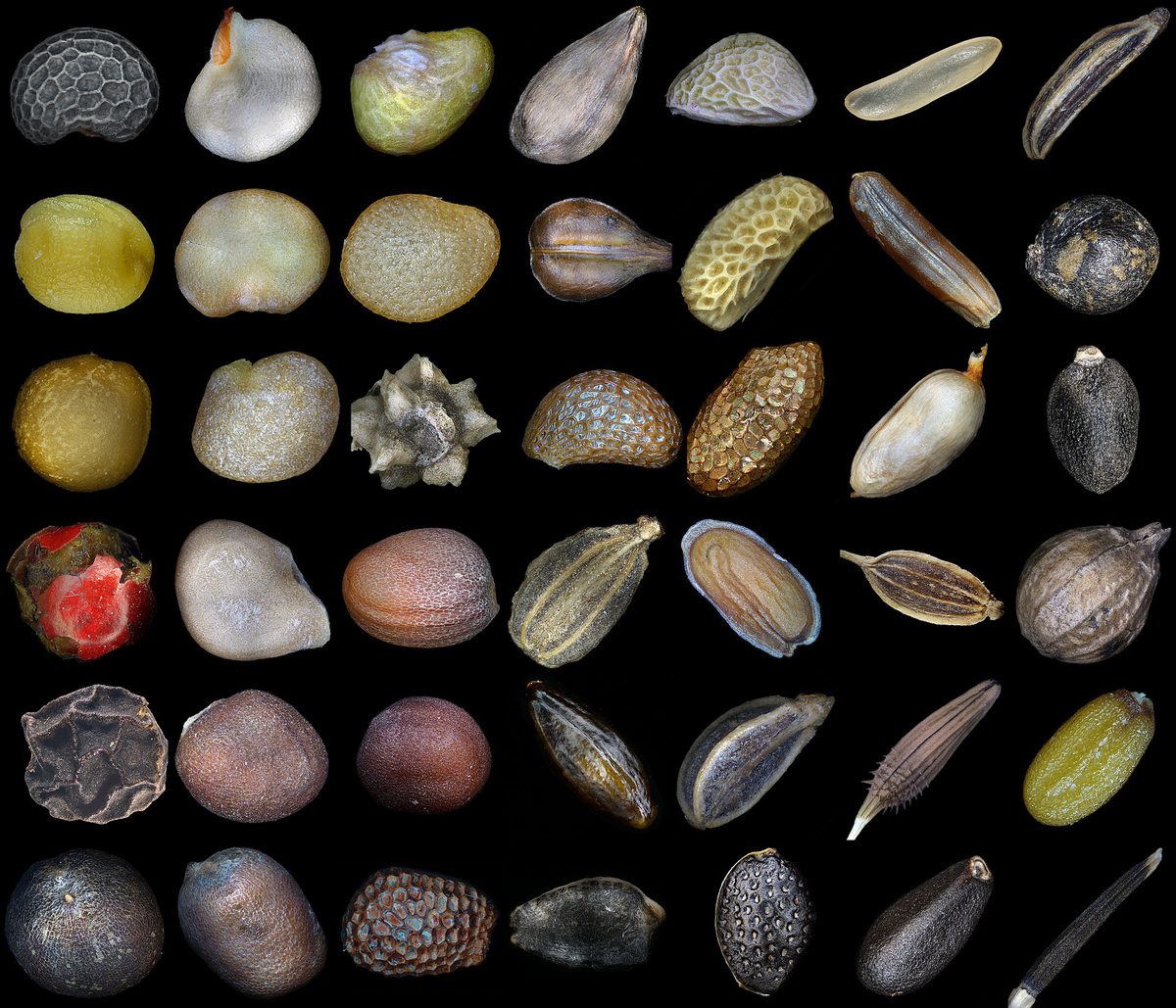
Dispersal solves the competition problem. A seed that falls directly beneath its parent lands in shade, in soil the parent is already drawing from, among its own siblings. Every dispersal mechanism is a way of borrowing movement: wind takes a parachute or a winged seed, water carries a float, an animal carries a hook on its fur or eats a fruit and deposits the seed elsewhere — often with a supply of fertiliser attached.
Dispersal moves the offspring; sexual reproduction makes them different. The two work together. A varied set of seeds scattered across varied locations means a population is testing several combinations in several places at once, and in a changing environment that is a far better bet than many copies in one spot.
Asexual reproduction in plants trades the other way, as the last unit showed. A runner or a tuber puts a genetically identical offspring close by, which works well when the parent's spot is good and the conditions are holding. Many plants keep both, deploying copies locally and sending varied seeds further afield.
Pause and explain
Why is it a disadvantage for a seed to land directly beneath its parent?
Check your reasoning after answering
Because it lands in the parent's shade, in soil the parent is already drawing water and nutrients from, and among its own siblings competing for the same resources. Dispersal mechanisms — parachutes, hooks, floats, edible fruits — borrow movement from wind, water or animals to put offspring where they are not competing with a large established plant.
Part 4 · Designing a germination comparison
Germination is an unusually good thing to investigate at home, because the outcome is countable rather than judged. Take two trays of twenty seeds of the same species from the same packet, hold everything the same except the one factor you are testing, and after a set number of days count how many have germinated. The result is a proportion, which is easy to compare.
Report it as a percentage of the number planted, not as a bare count — 18 of 20 is 90 per cent, 12 of 20 is 60 per cent, and the percentages are what let you compare trays of different sizes. State the interval too, because germination is a race as well as a total: a treatment that reaches the same percentage three days later is not performing equally.
Then bound the claim. A germination percentage measures germination over the stated days under the stated conditions. It does not measure how well the resulting plants grow, how much they yield, or whether they survive — those are later and separate outcomes needing their own measurements. This is the discipline of Chapter 1 applied to a tray of seeds, and it is the last thing this chapter asks you to practise.
Pause and explain
Why report germination as a percentage rather than a count?
Check your reasoning after answering
Because a percentage is a proportion of the number planted, so trays with different numbers of seeds can be compared directly — 18 of 20 is 90 per cent and 12 of 20 is 60 per cent. A bare count depends on how many were planted, so it cannot be compared across trials or reported meaningfully on its own.
Apply the whole unit · Compare seed treatments
Illustrative seven-day record, not a measured experiment: treatment A produced 18 germinated seeds out of 20 planted, and treatment B produced 12 out of 20. Species and all other conditions are stated as matched; the treatment is the amount of water.
Your task
Calculate both percentages, describe the difference the record measured, and qualify what it can say about the plants' later success.
What your response should show
- Explain the relevant biological process accurately.
- Use the supplied evidence and show calculation steps with units where needed.
- Connect a labeled model or mechanism with the claim.
- State an assumption, evidence limitation, or useful next observation.
Response guidance — after your attempt
Calculate A: 18 ÷ 20 = 0.9, which is 90 per cent germination within seven days.
Calculate B: 12 ÷ 20 = 0.6, which is 60 per cent germination within the same seven days.
State the difference precisely: 30 percentage points more seeds germinated under treatment A within the stated interval.
Qualify the claim: germination percentage over seven days says nothing about later growth, yield or survival, and twenty seeds per treatment is a small sample run once.
Treatment A germinated 18 of 20 seeds, which is 18 ÷ 20 = 90 per cent, and treatment B germinated 12 of 20, which is 12 ÷ 20 = 60 per cent. The difference is 30 percentage points more germination under A within the seven days recorded. Because the record states that species and all other conditions were matched and that water amount was the treatment, the comparison is structured to attribute the difference to water, which is more than most informal comparisons manage. Two things are still worth saying about what it measures. It is a total at one moment, not a rate: a tray that reaches 60 per cent by day seven might reach 90 by day ten, and the record cannot distinguish a treatment that prevents germination from one that merely delays it. And twenty seeds per treatment, run once, is a small sample, so ordinary variation in seed quality could account for part of a difference this size. What the record cannot address at all is anything after germination. A seed that germinates may still produce a weak seedling, and the water amount that favours germination is not necessarily the one that favours growth, flowering or yield — those are separate outcomes over longer periods, needing their own measurements. The supportable claim is narrow and useful: under these conditions, over seven days, treatment A was associated with 90 per cent germination against B's 60 per cent.
Scientific references for this unit
Parent / teacher teaching notes
Ask for a because-statement and a labeled relationship, not just a memorized word. Work through one calculation step at a time, permit oral or diagram responses, and use flexible sessions for difficult reading. Compare the learner’s actual evidence with the supplied model; do not reward copying or agreement with a personal preference. No private family, genetic, or medical records are required.
The key idea
Flowering plants reproduce through structures and processes connecting pollen transfer, fertilization, seeds, and growth. Pollen carries cells involved in producing or delivering male gametes; an ovule contains structures involved in female reproduction. Pollination moves pollen to a suitable receptive surface; fertilization is a later fusion event. These terms should not be used interchangeably.
Worked examples
Example 1 · Read a flower's courier from its structure
- Match X's features to a target: colour, scent and nectar are signals and rewards, which only matter to an animal that can detect them.
- Match Y's features to wind: no signals are needed, light dry pollen travels on air, and feathery stigmas present a large area to catch grains.
- Connect to quantity: targeted delivery by an insect needs far less pollen than scattering it on the wind, which is why Y produces so much more.
Structures are usually readable as solutions. Ask what problem each one solves.
Example 2 · Distinguish prevented from delayed
- Identify what was measured: the proportion germinated by one particular day, which is a total at a moment.
- Identify the alternative the data cannot exclude: B's remaining seeds may germinate later, making the difference one of rate rather than of final total.
- Name what would separate them: continuing the count for several more days and recording when each seed germinated.
A measurement at one moment cannot by itself tell you about a process over time.
Avoid these mistakes
- Mistake: pollination and fertilisation are the same event. Pollination is pollen reaching a stigma; fertilisation is a nucleus from that pollen fusing with an egg cell, and a flower can be pollinated without ever being fertilised.
- Mistake: a seed needs soil nutrients to germinate. It germinates on the food store packed inside it, which is why cress will sprout on damp paper; water is the trigger it cannot do without.
- Mistake: the shoot comes first. The root emerges first, because anchorage and water matter before light while the seed's own food store lasts.
- Mistake: 18 of 20 against 12 of 20 shows which plants will do better. It shows germination within seven days — 90 against 60 per cent — and says nothing about later growth, yield or survival.
Check your understanding
Does observing a pollinator visit prove viable seeds formed?
Discuss the answer
No. The visit is one stage; transfer, compatibility, fertilization, and development need further evidence.
Why can early germination occur before a seedling has green leaves?
Discuss the answer
The seed can use stored resources and cellular respiration to support initial growth.
Words to know
- pollination
- The transfer of pollen to a stigma — delivery only, and separate from the fertilisation that may or may not follow.
- ovule
- The structure inside the ovary holding an egg cell; after fertilisation it develops into a seed.
- embryo
- The tiny plant inside a seed, with the beginnings of a root and shoot, packed alongside a food store.
- germination
- The resumption of growth when a seed takes up water and mobilises its food store; the root emerges before the shoot.
- dispersal
- Moving seeds away from the parent by borrowing movement from wind, water or animals, so offspring do not compete with an established plant.
Extend your scientific explanation
Compare a second supplied example or the linked educational reference. Identify a connection, a model limit, and an additional observation that would test the explanation.
In the real world
Use a clear question, reliable observations, and a biological mechanism to evaluate a claim. State what remains uncertain before applying a classroom model to a different setting.
Exit check
Why should the denominator include all tested seeds?
Check your explanation after answering
It defines success relative to the original sample; excluding failures would inflate the reported germination percentage.
Explain your reasoning without notes. If a key idea is missing, revisit the lesson and try again.
Problem 1
Answer and explanation
Mean response time is 0.25 s and numerical range is 0.10 s. A stimulus-response task involves detection, processing, and action plus measurement conditions. These values cannot establish overall intelligence or health; attention, equipment, and task demands also matter. They describe only the supplied fictional trials.
Mean: 0.75/3=0.25 s.
Range: 0.30−0.20=0.10 s.
Separate the task measure from an unsupported personal conclusion.
Response criteria
- Explain the relevant biological process accurately.
- Use the supplied evidence and show calculation steps with units where needed.
- Connect a labeled model or mechanism with the claim.
- State an assumption, evidence limitation, or useful next observation.
Problem 2
Answer and explanation
No. Signals and processing contribute to perception, interpretation, and response.
Problem 3
Answer and explanation
The response opposes the rise, so it represents negative feedback. The final 21 lies within the stated working range. The units and thresholds are invented for an artificial system; they do not evaluate a learner’s body. The model illustrates a relationship while omitting the complexity of living regulation.
Identify the initial rise.
Connect the activated output with the opposing decrease.
Compare 21 with the invented range.
Response criteria
- Explain the relevant biological process accurately.
- Use the supplied evidence and show calculation steps with units where needed.
- Connect a labeled model or mechanism with the claim.
- State an assumption, evidence limitation, or useful next observation.
Problem 4
Answer and explanation
No. Regulation can maintain functioning ranges while values vary with conditions.
Problem 5
Answer and explanation
The model illustrates target-specific recognition and a memory-related faster response to A. It does not establish an identical response to B or guaranteed protection in a real person. Matching symbols simplify molecular interactions and omit many defense pathways. The supplied pattern is educational evidence about the model, not a clinical assessment.
Identify the repeated target A.
Compare response timing under the stated model.
Avoid assigning the same result to B or every real infection.
Response criteria
- Explain the relevant biological process accurately.
- Use the supplied evidence and show calculation steps with units where needed.
- Connect a labeled model or mechanism with the claim.
- State an assumption, evidence limitation, or useful next observation.
Problem 6
Answer and explanation
No. Bacteria have diverse roles, including many that are harmless or beneficial in particular contexts.
Problem 7
Answer and explanation
A represents asexual reproduction and B sexual reproduction. A’s new mutation shows that asexual offspring are not guaranteed identical in every detail. The records describe production mechanisms, but later survival and reproductive success depend on development and conditions. More information is needed to compare outcomes, not merely count starting cells.
Identify no fusion in A and fusion in B.
Connect A’s new mutation with variation.
Consider later survival and reproductive stages.
Response criteria
- Explain the relevant biological process accurately.
- Use the supplied evidence and show calculation steps with units where needed.
- Connect a labeled model or mechanism with the claim.
- State an assumption, evidence limitation, or useful next observation.
Problem 8
Answer and explanation
No. Mutations and environmental effects can produce differences, even when offspring share much inherited material.
Problem 9
Answer and explanation
A has 90% germination and B 60%, a 30-percentage-point difference in this illustrative comparison. It supports a treatment-related germination question under the matched conditions, but does not establish adult survival, universal species response, or every causal detail. Replicate independent groups and record later growth separately.
A: 18/20×100=90%.
B: 12/20×100=60%.
Difference is 30 percentage points.
Limit the claim to the stipulated germination interval.
Response criteria
- Explain the relevant biological process accurately.
- Use the supplied evidence and show calculation steps with units where needed.
- Connect a labeled model or mechanism with the claim.
- State an assumption, evidence limitation, or useful next observation.
Problem 10
Answer and explanation
No. The visit is one stage; transfer, compatibility, fertilization, and development need further evidence.