Plant, Animal & Other Cell Types · Grade 7 Science
Chapter: Cells, Transport & Cellular EnergyPlant, Animal & Other Cell Types
Learning goals
- I can explain plant, animal & other cell types.
- I can use evidence, a model, and stated assumptions to support a biological explanation.
Before this unit
Use the supplied vocabulary, distinguish an observation from an explanation, and identify any units or model assumptions. Revisit a connected earlier unit if needed; new terms are explained here.
Use three flexible 40–45-minute sessions: core background and Parts 1–2 with their checks; Parts 3–4 and the worked application; then remaining practice, a labeled model, revision, and the exit check. Checks completed during reading can count toward the practice set. Read one short part at a time. Investigations and chapter review/quiz have separate sessions, and flexible weeks allow more time.
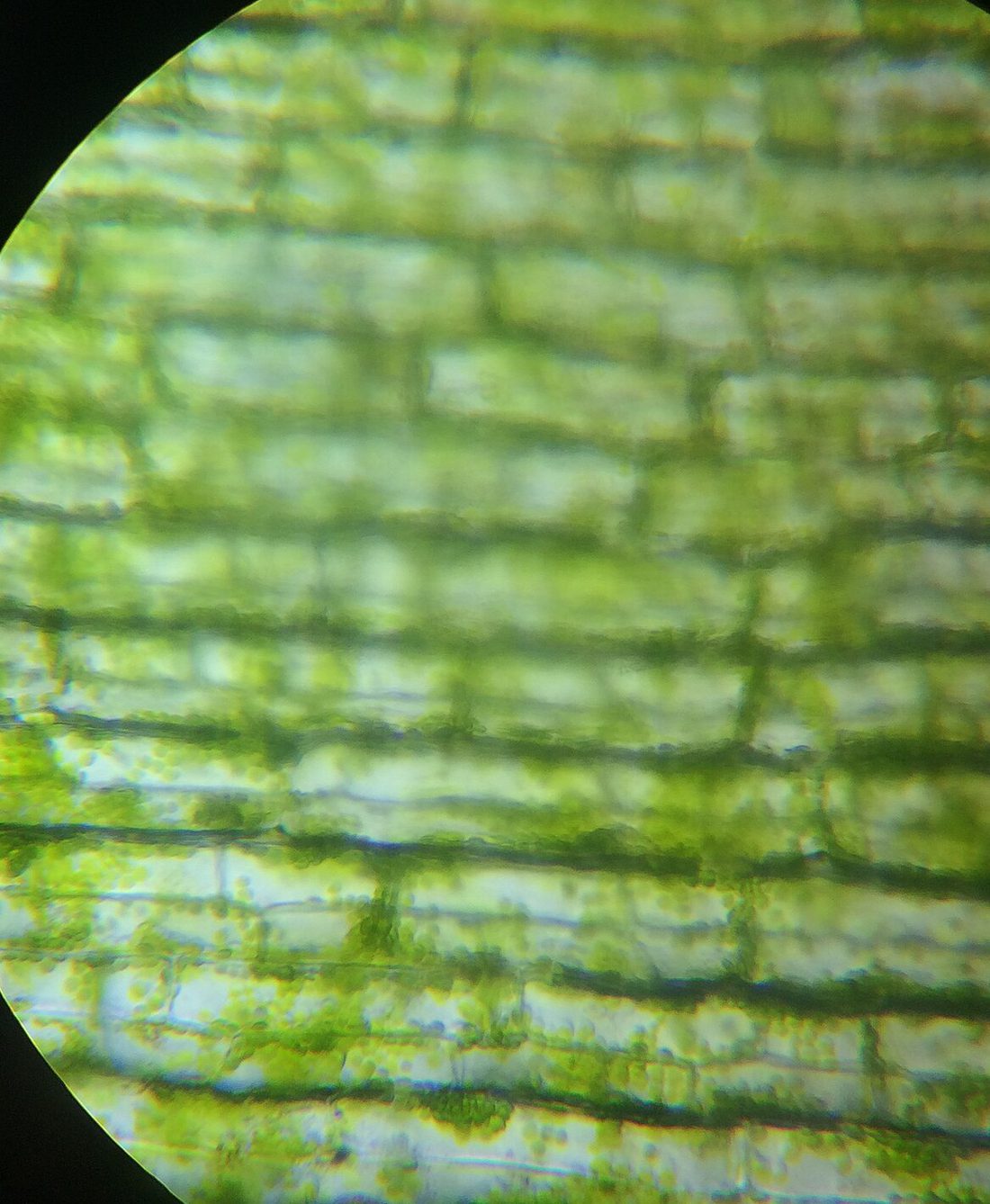
Leave a lettuce leaf out on the counter and by evening it is limp; drop it in cold water and in an hour it is crisp again. Nothing was added to it but water, and no animal behaves this way — your arm does not go limp and firm again with the weather. That everyday difference is a clue to the real structural differences between plant and animal cells. Both are eukaryotic, so both have a cell membrane, cytoplasm, ribosomes, mitochondria and a nucleus, and both follow the same cell theory. But a plant cell has three things an animal cell does not: a rigid cell wall outside the membrane, chloroplasts that capture light, and one enormous vacuole that can fill most of the cell's volume.
The cell wall is made mostly of cellulose, the same tough material that made Hooke's dead cork keep its shape, and it sits outside the membrane rather than replacing it. Its job is mechanical: it resists pressure from within. The central vacuole is a membrane-bound sac of water and dissolved substances, and when it is full it presses the cytoplasm outward against the wall. That outward pressure is called turgor, and it is what holds a non-woody plant upright. A wilted plant has lost water, the vacuoles have shrunk, the pressure has dropped — and the crisp lettuce is the same cells with their vacuoles refilled. A plant has no skeleton; turgor and cellulose walls are the skeleton.
Chloroplasts are where photosynthesis happens, and they contain chlorophyll, the pigment that makes leaves green and absorbs the light energy the reaction needs. A single leaf cell may hold fifty or more, and they move within the cell towards better light. Two cautions. First, not every plant cell has them: root cells sit in the dark and have none, which is why roots are not green. Second, a plant cell with chloroplasts still has mitochondria and still respires — making glucose and releasing energy from it are different processes that both run. More generally, cells of one organism differ from each other as much as they differ across kingdoms. A specialized cell such as a root hair cell, a nerve cell or a red blood cell is built for one job, so a general "plant cell" diagram is a composite, not a portrait of any real cell.
Build your understanding
Where this fits
We now know what is inside a cell in general. But a leaf and your arm behave nothing alike, and cells are the reason. This unit compares plant and animal cells — first what they share, which is most of it, then the three structures a plant cell adds. It also introduces turgor, which the next unit's work on water movement will explain.
Use three flexible 40–45-minute sessions: core background and Parts 1–2 with their checks; Parts 3–4 and the worked application; then remaining practice, a labeled model, revision, and the exit check. Checks completed during reading can count toward the practice set. Read one short part at a time. Investigations and chapter review/quiz have separate sessions, and flexible weeks allow more time.
Part 1 · What plant and animal cells share, before what divides them
It is easy to learn the differences and forget how much is the same. Plant and animal cells are both eukaryotic: each keeps its DNA inside a nucleus, builds proteins on ribosomes, releases energy from food in mitochondria, and is bounded by a selectively permeable membrane. Both are filled with cytoplasm, both divide to make new cells, and both obey all three claims of cell theory. If you were handed an unlabelled list of these features you could not tell the two apart.
That shared list is not a coincidence; it reflects shared ancestry, which is a theme later units return to. It also means the differences are additions, not replacements. A plant cell does not have a wall instead of a membrane — it has a wall as well as one, with the membrane pressed against the wall from inside. Keeping that straight prevents a common error later, because the membrane is what controls what enters, while the wall is simply strong.
So the honest comparison is: same core machinery, plus three structures in the plant cell that the animal cell does without. Everything that follows in this unit is about what those three structures let a plant do — stand up without a skeleton, feed itself from light, and store water in bulk.
Pause and explain
Name three structures a plant cell and an animal cell both have, and say why that matters.
Check your reasoning after answering
Both have a cell membrane, cytoplasm with ribosomes, and mitochondria, and both keep DNA in a nucleus. It matters because it shows the differences between them are additions to a shared design rather than two unrelated kinds of cell, and because it means a plant cell still respires in mitochondria just as an animal cell does.
Part 2 · The wall and the membrane do different jobs
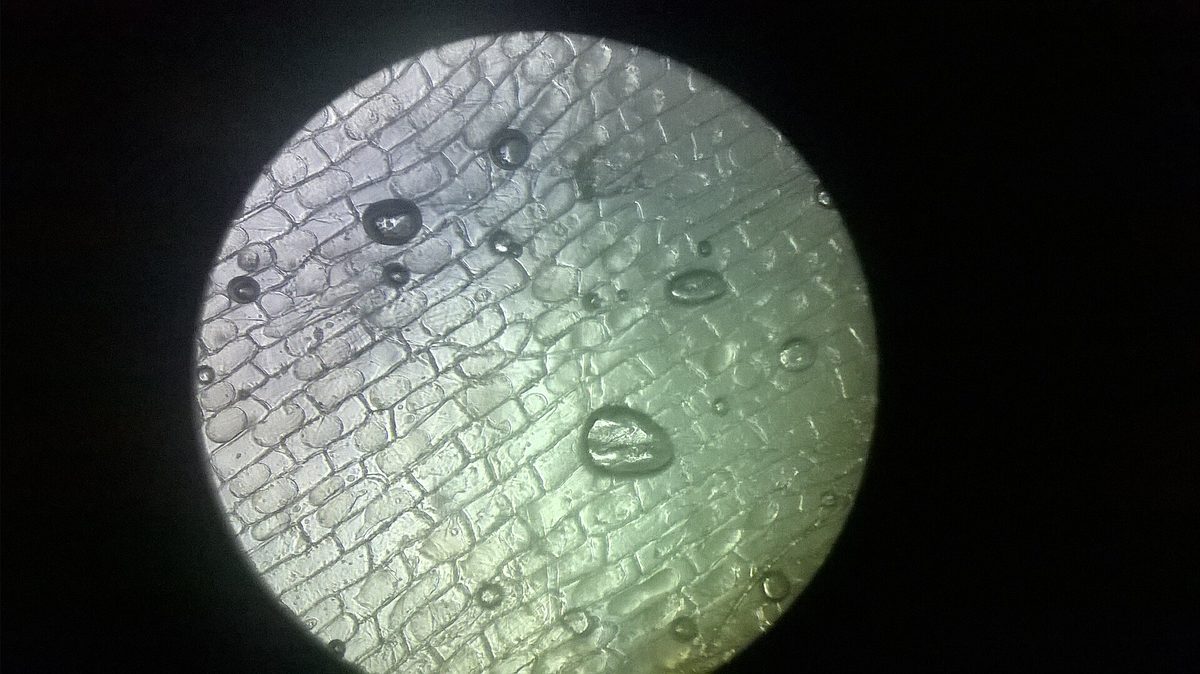
The cell wall is a mesh of cellulose fibres laid down outside the membrane. It is strong and it is porous: water and dissolved substances pass through it freely, so it does no selecting at all. Everything that controls what enters the cell still happens at the membrane, pressed against the wall's inner face. Confusing the two leads to the wrong prediction every time, because the wall's permeability tempts you to think a plant cell takes in anything, when in fact it is as selective as an animal cell.
What the wall does is resist pressure. Push water into an animal cell and it swells and can burst, because nothing holds it in. Push water into a plant cell and the vacuole swells, the cytoplasm presses outward, and the wall pushes back — the cell becomes firm instead of bursting. That balance is turgor, and a plant relies on it: a stem with full vacuoles stands, a stem with empty ones wilts.
The reverse case is just as telling. Put a plant cell in very salty water and water leaves it. The vacuole shrinks, the membrane pulls away from the inside of the wall, and the cell goes slack while the wall keeps its shape. That separation is called plasmolysis, and it is good evidence that wall and membrane are genuinely separate layers — you can see the gap open up between them under a microscope.
Pause and explain
Why can a plant cell take in a great deal of water without bursting, when an animal cell cannot?
Check your reasoning after answering
Because the cellulose wall outside the membrane resists the outward pressure. As water enters, the vacuole swells and presses the cytoplasm against the wall, and the wall pushes back, so the pressure rises and inflow slows instead of the cell rupturing. An animal cell has no wall, so nothing opposes the swelling.
Part 3 · Chloroplasts, and the cells that do without them
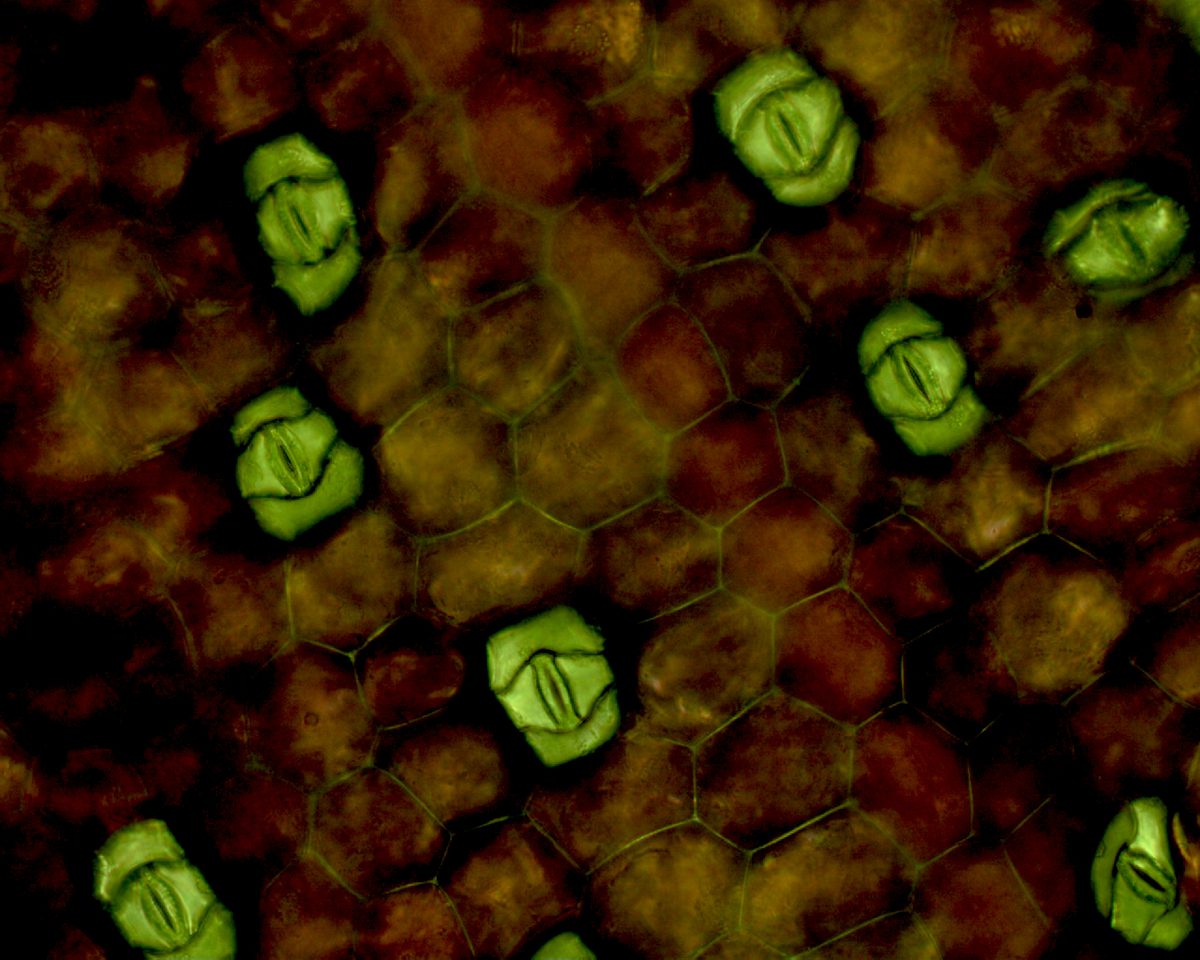
A chloroplast is an organelle with two outer membranes and stacks of flattened sacs inside, and those stacks hold chlorophyll. Chlorophyll absorbs red and blue light strongly and reflects green, which is why a leaf looks green — you are seeing the light the plant did not use. Inside the chloroplast, that captured energy drives the reaction that builds glucose from carbon dioxide and water.
Chloroplasts are not evenly distributed. A palisade cell just under the upper surface of a leaf is packed with them and shaped like a column so that light passes down through many; a cell in the root has none at all and depends entirely on sugar delivered from the leaves. If you have ever seen a potato sprout turn green on a windowsill, you have watched cells that had no chloroplasts develop them once light reached them.
The point to hold on to is that having chloroplasts does not exempt a plant from respiration. Photosynthesis stores energy in glucose; respiration in the mitochondria releases it again for work. A plant runs both, all day, and runs respiration alone at night. Treating them as alternatives — plants photosynthesise, animals respire — is the error this unit most wants you to avoid.
Pause and explain
A root cell has no chloroplasts. Is it still a plant cell, and how does it get energy?
Check your reasoning after answering
Yes. It has a cellulose wall, a vacuole, a nucleus and mitochondria, so it is a plant cell in every other respect; chloroplasts would be useless underground. It gets its energy from glucose made in the leaves and transported to it, which it then breaks down by respiration in its mitochondria, exactly as an animal cell would.
Part 4 · Classifying a cell from more than one observation
Suppose you are handed a micrograph and asked what kind of cell it shows. One feature is rarely enough. A visible wall narrows it down but does not settle it: plants have walls, and so do fungi, and so do bacteria, built of different materials. Green colour suggests chloroplasts, but some bacteria and algae are green by other means. A nucleus tells you it is eukaryotic and rules out bacteria, but says nothing about plant or animal.
Combinations do the work. Wall plus nucleus plus chloroplasts gives a photosynthetic eukaryote, most likely a plant or an alga. Wall plus DNA with no enclosed nucleus gives a prokaryote. Membrane and nucleus with no wall gives an animal cell or another wall-less eukaryote. Each conclusion is as strong as the set of features it rests on, and each should be stated with the alternatives it has not excluded.
This is also where specialisation complicates things. A mature red blood cell has no nucleus, so judged by one feature it would be sorted with the bacteria, which is plainly wrong. A root cell has no chloroplasts. Classification works on what a cell has and on what organism it came from, and a careful answer says which observations it used and what further observation would narrow it further.
Pause and explain
Why is a visible cell wall not enough to call something a plant cell?
Check your reasoning after answering
Because walls are not unique to plants: fungi build walls of chitin and bacteria build them of peptidoglycan, both different materials from plant cellulose. A wall shows only that the cell has a rigid outer layer. To call it a plant cell you need further evidence, such as an enclosed nucleus together with chloroplasts or a large central vacuole.
Apply the whole unit · Compare cell records
Illustrative records, not real specimens: Cell A has a wall, an enclosed nucleus and chloroplasts. Cell B has a wall and DNA, but no enclosed nucleus. Cell C has a membrane and an enclosed nucleus, and no wall.
Your task
Say what each combination of features supports, name what each conclusion has not ruled out, and give one further observation for the least certain case.
What your response should show
- Explain the relevant biological process accurately.
- Use the supplied evidence and show calculation steps with units where needed.
- Connect a labeled model or mechanism with the claim.
- State an assumption, evidence limitation, or useful next observation.
Response guidance — after your attempt
Take the features in combination rather than one at a time, since a wall alone appears in plants, fungi and bacteria.
Cell A: an enclosed nucleus makes it eukaryotic, and chloroplasts make it photosynthetic, so a plant or algal cell is well supported.
Cell B: DNA present but no enclosed nucleus makes it prokaryotic, so a bacterium is well supported, and its wall is a different material from a plant's cellulose.
Cell C: a nucleus with no wall supports an animal cell, but does not rule out other wall-less eukaryotes such as a protist, which is the least certain of the three.
Cell A is a photosynthetic eukaryote. The enclosed nucleus rules out bacteria and the chloroplasts show it captures light, so a plant or algal cell fits; the records do not distinguish between those two. Cell B is a prokaryote: it holds DNA but has no enclosed nucleus, which is the defining difference, and although it has a wall, a bacterial wall is built of different material from a plant's cellulose, so the wall itself is not what identifies it. Cell C is a eukaryote without a wall, which an animal cell fits, but so do many protists and so does a cell that has lost features through specialisation — this is the least certain of the three. The useful further observation for Cell C is whether it has a large central vacuole and whether it can move or feed on its own: a central vacuole would point back towards a plant cell that happens to lack chloroplasts, while independent swimming and feeding would point to a protist. Throughout, each conclusion rests on a combination of features, and a single feature — a wall, a colour, a nucleus — would have been enough to mislead.
Scientific references for this unit
Parent / teacher teaching notes
Ask for a because-statement and a labeled relationship, not just a memorized word. Work through one calculation step at a time, permit oral or diagram responses, and use flexible sessions for difficult reading. Compare the learner’s actual evidence with the supplied model; do not reward copying or agreement with a personal preference. No private family, genetic, or medical records are required.
The key idea
Plant and animal cells are eukaryotic and share many structures, including a membrane, cytoplasm, ribosomes, mitochondria, and typically a nucleus. Comparing their structures explains some different functions, but a general diagram should not be mistaken for every cell in every tissue. Specialized cells can differ from the typical models.
Worked examples
Example 1 · Explain the limp lettuce
- Identify the structure that provides stiffness: a non-woody plant stands by turgor, the pressure of full vacuoles against cellulose walls, not by any skeleton.
- Explain going limp: water evaporated from the leaf, the vacuoles lost volume, the pressure against the walls fell, and the tissue became floppy.
- Explain recovering: water moved back into the cells by osmosis, the vacuoles refilled, pressure rose again and the walls were pushed outwards until the leaf was firm.
An animal has no equivalent, because animal cells have no walls for pressure to push against.
Example 2 · Judge a classification from one feature
- Check whether the feature is unique. It is not: fungi build walls of chitin, bacteria build them of peptidoglycan, and plants build them of cellulose.
- State what the observation does support — that the cells have a rigid outer layer, which rules out a typical animal cell.
- Name the evidence that would decide it: an enclosed nucleus to establish a eukaryote, plus chloroplasts or a large central vacuole to establish a plant.
Name what a feature rules out as well as what it suggests; that is usually the stronger half of the answer.
Avoid these mistakes
- Mistake: a plant cell has a wall instead of a membrane. It has both, with the membrane pressed against the wall from inside — and the membrane, not the porous wall, is what selects what enters.
- Mistake: plants photosynthesise and animals respire. Plant cells have mitochondria and respire constantly, including all night; photosynthesis stores energy in glucose and respiration releases it again.
- Mistake: every plant cell is green. Root cells have no chloroplasts, which is why roots are not green, and they live on sugar sent down from the leaves.
- Mistake: one feature identifies a cell. Fungi and bacteria have walls too, so a wall alone settles nothing; combinations of features, such as a nucleus together with chloroplasts, are what support a conclusion.
Check your understanding
What shared energy process occurs in both plant and animal cells?
Discuss the answer
Both can carry out cellular respiration; plant photosynthesis does not replace it.
What provides selective exchange in a plant cell?
Discuss the answer
The membrane, not simply the rigid cell wall. The wall contributes support and protection.
Words to know
- cell wall
- A rigid cellulose layer outside a plant cell's membrane that resists pressure from within; it is porous, so it does no selecting.
- chloroplast
- The organelle holding chlorophyll, where photosynthesis captures light energy and builds glucose; absent from root cells.
- vacuole
- A membrane-bound sac; in a plant cell one large central vacuole of water and dissolved substances can fill most of the volume.
- turgor
- The outward pressure of a full vacuole against the cell wall, which holds a non-woody plant upright; losing it is wilting.
- specialized cell
- A cell built for one job, such as a root hair, guard cell or red blood cell, which no general diagram represents.
Extend your scientific explanation
Compare a second supplied example or the linked educational reference. Identify a connection, a model limit, and an additional observation that would test the explanation.
In the real world
Use a clear question, reliable observations, and a biological mechanism to evaluate a claim. State what remains uncertain before applying a classroom model to a different setting.
Exit check
Why can a wall alone not identify a plant?
Check your explanation after answering
Other organisms, including many fungi and bacteria, also have walls. Additional features and context are needed.
Explain your reasoning without notes. If a key idea is missing, revisit the lesson and try again.